Karakter boyutu :


2008’den Beri Değişim : Herşey ve Hiçbir Şey

22 Temmuz 2014 Salı Saat 03:12
Tedo Japaridze, Ağustos 2013
Gürcistan’ın topraklarının % 20’sini kaybettiği ve NATO üyeliğinin tehlikeye girdiği 2008 yılının üzerinden beş sene geçti. O zamandan beri yüzbinlerce yurt içi mülteci yurtlarıyla bağları koparılmış olarak yaşıyor ve işgal altındaki topraklarda rejimler fiili denetimleri altındaki bölgeleri dikenli tellerle çevirdiler. Gürcistan NATO üyeliğine “ebediyen istekli” olarak tanımlanıyor. Yine de Gürcistan’da yapılan anketler batı tercihinin sarsılmadan sürdüğünü gösteriyor. Neden acaba ?
Rusya ile Gürcistan komşu kalacaklar ; ikimiz de coğrafyamızı değiştiremeyiz. Rusya’da bir milyon Gürcü yaşıyor ve gönderdikleri paralar Gürcistan ekonomisi için yaşamsal öneme sahip. Hem yüksek eğitimliler hem hayatını emeğiyle kazananlar Rusça konuşmaya devam ediyor. İki toplum da aynı inanca sahip ve ikisinde de dinsel duygular çok güçlü. Peki Stalin ve Beria’nın doğduğu ülkede “neden” Rusya yanlısı bir irade yok ?
Sebeplerden biri Rusya’nın “yumuşak güç” anlayışının olmaması. Gürcistan’ın yeni hükümeti iktidara geldiği Ekim 2012’den beri 2014 Soçi Olimpiyatı’na katılmak istediğini beyan ediyor ve ticari ilişkileri canlandıracak adımlar atıyor. Ne var ki Gürcistan halkının çoğunluğu Avrasya Birliği ve Kolektif Güvenlik Antlaşması Örgütü’ne üyeliği cazip bulmuyor. Bu “seçenekler” Rusya’nın hayat sahası politikasının değişik yüzleri.
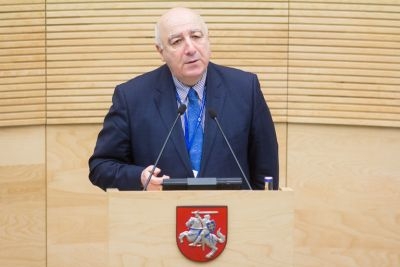
Tedo Japaridze: Gürcistan Parlamentosu Dış İlişkiler Komitesi Başkanı
Temas kurmak ihtimal dışı değil. Rusya başbakanı ayrılıkçı antitelerin “sınırlarının çizilmesinin” Kremlin’in politikası olmadığını duyurdu. Bu gerçekçi bir yaklaşım. 2008 yılında Devlet Başkanı Saakaşvili Rusya’nın tuzağına düştü. Ne var ki Gürcistan’ın kaybı otomatikman Rusya’nın kazanç hanesine yazılmıyor. Moskova Rusya’daki çevrelerin ve nakit ve akaryakıt sübvansiyonlarıyla desteklemek zorunda olduğu yandaş rejimlerin yerleşik çıkarları tarafından rehin alınmış durumda ; bölgede ulus yaratma projelerine kalkışan Kremlin bunun Kuzey Kafkasya’daki domino etkileriyle de yüzleşmek zorunda. Sonuç olarak Moskova’nın –Brüksel’in tersine- “Komşuluk Politikası” yok.
Bu jeopolitik açıdan kötü haber : hiçbir savaş “barış teorisi” olmadan kazanılamaz. Gürcistan’ın Avro-Atlantik yönelimi rakipsiz ; yani “havuç” ve “sopa” politikası Tiflis açısından bir anlam ifade etmiyor. Gürcistan daha yüksek insan hakları standartları ve dikey hareketlilik fırsatı hedeflerinin peşinden gidiyor. “Avrupa’ya geri dönüşün” anlamı büyük. Rusya seçeneği bağımsızlığımız, egemenliğimiz ve normal demokratik devlet olma kapasitemiz için tehdit oluşturuyor. En azından Gürcistan halkının algısı bu. Gerçekçi düşünebilen herkes modus vivendi bulunmasının şart olduğunu kabul ediyor. Seçime zorlayarak “alternatif yolu” benimsetmek imkansız.
Kaynak:http://carnegieendowment.org/2013/08/08/change-since-2008.-everything-and-nothing/ghq0?reloadFlag=1
Çeviri : Dr. Ömer Aytek Kurmel
Cherkessia.net, 23 Temmuz 2014
****
Change Since 2008. Everything and Nothing
Tedo Japaridze ,Thursday, August 8, 2013
Five years have elapsed since 2008, when Georgia lost 20 percent of its sovereign territory and was shunned from NATO membership. Since then, hundreds of thousands of internally displaced persons (IDPs) have no access to their homes; the regimes of the occupied territories have added barbed wire across the areas of their de facto control. Meanwhile, Georgia is often portrayed as the “perennially aspirant” NATO member. Nonetheless, polls in Georgia indicate that the commitment to a western trajectory remains unwavering. A taboo question is “why?”
Russia will continue to neighbor Georgia—neither of us can change our geography; that is inescapable. There are one million Georgians living in Russia, sending remittances vital to the Georgian economy. The Russian language is still spoken both by the highly educated and working class people. We are two deeply religious societies, of the same faith. So, “why indeed” is there no pro-Russian force at Stalin’s and Beria’s birthplace?
One reason is that Russia has no understanding of “soft power.” Since October 2012, the new Georgian government has indicated its willingness to be present at the 2014 Sochi Olympic Games; it has made steps to revitalize trade relations. Clearly, however, most Georgians do not find the Eurasian Union or the Collective Security Treaty Organization membership appealing. These “options” appear to be multilateral facets of a Russian lebensraum policy.
Engagement as such is not in vain. As of recent, the Russian prime minister indicated that the “borderization” of secessionist entities was not Kremlin policy. Ultimately, this is a realistic approach. In 2008, President Saakashvili misguidedly tried to counterbalance strategic asymmetry with tactical maneuvering, playing into a Russian trap. However, Georgia’s loss is not straightforwardly Russia’s gain. Moscow is held hostage to vested interests in Russia and client regimes it needs to support with cash and fuel subsidies; in kick-starting nation-building projects in the region, the Kremlin has to deal with domino effects in the North Caucasus. Bottom line: Moscow, unlike Brussels, does not have a “Neighborhood Policy.”
This is in fact bad geopolitics: no war can be won without a “peace theory.” Georgia’s Euro-Atlantic trajectory is uncontested, quite decoupled from either “sticks” or “carrots.” It provides the polity with a sense of direction and intervals of achievement, the promise of higher human rights standards and opportunity for upward social mobility. “Returning to Europe” is meaningful. The Russian option is but a threat—a threat to our independence, sovereignty, and the capacity-building to become a normal, relevant, and democratic state. At least these are the perceptions on Georgian minds. While anyone with a sense of realism admits that a modus vivendi must be found, being intimidated into a choice hardly constitutes an “alternative trajectory.”
Tedo Japaridze: is chairman of the Committee on Foreign Relations in the Parliament of Georgia.
Bu haber toplam 2440 defa okundu.


WOTEY
Gürcistan'ın yolu artık belli. Ancak Rusya ile gerilimli siyasi ilişki bu ülkeyi yorar.Japaridze'nin yazısından bu stratejiyi anlamak mümkün.
23 Temmuz 2014 Çarşamba Saat 12:57