Karakter boyutu :


Lilia Shevtsova:Sonraki Rus Devrimi (III)

30 Ekim 2014 Perşembe Saat 21:08
Lilia Shevtsova , 30 Ekim 2012
Gelecekte protesto dalgası olacaksa sol ve muhtemelen sol-liberal değerler tarafından yönlendirilecek.Klasik liberalizm Rusya’da geç 1980’ler ve erken 1990’larda bir zemin yakalamıştı ama Yeltsin ve ekibi yeni otoriterliğin önünü açan “liberal reformlar” yoluyla bu fırsatı harcadılar. Liberaller Putin döneminde kitlelerin nabzını tutamadılar ve kentli azınlığın sesi olarak kaldılar. Liberaller Putin rejimine ne kadar uzun hizmet ederlerse toplumun liberal gündeme ilişkin kuşkuları o denli artacak. Bu ironik bir durumdur.
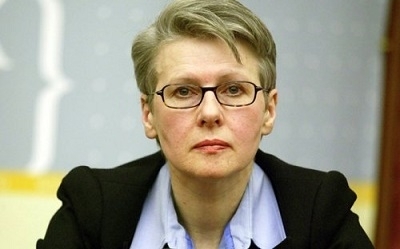
Lilia Shevtsova: C.M.Center Rusya İç Politika ve Siyasal Kurumlar Programı Kıdemli Ortağı
Liberal aydınlar ve siyasetçiler Yeltsin döneminde olduğu gibi yine bir ikilemle karşılacaklar. Ülkeye zarar veren çürümüş bir rejimle,özel mülkiyete geçirilmiş işletmeleri yeniden kamulaştırması kaçınılmaz olan sol güçler arasında bir seçim yapacaklar. Yeltsin zamanında birçok demokrat komünistlerin iktidarı yeniden ele geçirmesinden korkarak çürümüş yöneticileri destekledi ve hasta Yeltsin’e ikinci zaferi kazandıran seçim hilesine göz yumdu. Böylece bugünkü otoriter rejimin zemini hazırlandı. Liberal azınlık yakında benzer bir tercih yapacak. Liberal olmayan güçlerin korktuğu için mevcut rejimi mi destekleyecek yoksa demokratik süreci, yani serbest ve adil seçimleri mi benimseyecek ?Eğer liberal azınlık bu defa da resmi makamların yanında yer alırsa liberalizm çağdaş Rusya’da çöker ve yakın gelecekte canlanması neredeyse imkansızhale gelir.
Liberallerin ve Batı’nın korktuğu Rus milliyetçiliği ne durumda ?Son gelişmeler milliyetçiliğin ülkede egemen güç olmadığını gösterdi. En azından şimdilik. Rus milliyetçiliği dönüşüm geçirdi. Şahıs iktidarına dayanan emperyal versiyon yerini Putin rejimine ve yeni-yayılmacı emelleri olan sisteme açıkça karşı çıkan bir başka versiyona bıraktı. Rus milliyetçileri ülkenin ulus-devlete dönüşmesini ve Kafkasya’dan vazgeçilmesini ilk defa gündeme getirenler arasındaydı. Ilımlı milliyetçiler Rusya’nın parlamenter cumhuriyete dönüşmesi için anayasal reform gerektiğini söylediklerinde bu konu liberallerin gündeminde henüz yoktu.
Kısaca, Rus milliyetçiliği rejime muhalif bir güç haline geliyor. Ama ne kadar etkili olacağı ve hangi kanadın hakimiyet kuracağı henüz belli değil. Komünizm sonrası dönüşüm sürecinde Polonya, Baltık ve Ukrayna milliyetçilikleri Batı-yanlısı idiler ve Avrupalı bir içeriğe sahiplerdi. Rus milliyetçiliği ise hala Batı karşıtı. Bununla birlikte ılımlı Rus milliyetçileri hukukun üstünlüğünü ve siyasal çoğulculuğu benimsiyorlar. Rus milliyetçiliğin gelişimi çelişkilerle dolu olacak. Şu kesin :hareketPutin rejimini zayıflatmaya yarayacak ama içindeki radikaller liberal demokratik sistem kurma ve Rusya’yı Avrupa ile bütünleştirme çabalarını zora sokacak.
Kriz veya Çürüme
Trend değişmezseRusyaekonomik, sosyal ve jeopolitik bakımdan inişe geçecek.Statükonun muhafaza edildiği ve muhaliflerin ezildiği bir ülke kendini yenileyemez. Bu inişin nasıl olacağını şimdiden kestirmek imkansız. Bugünden öngöremeyeceğimiz bir zaman dilimine yayılacak uzun bir çürüme süreci mi yaşanacak ?Yoksa süreç sosyal ve siyasal patlamayla kesilecek mi ? Eğer öyleyse ne zaman ve sonuçları ne olacak ?Bu patlama otoriter sistemin yeni bir görünüm altında sürmesine mi yarayacak yoksa Rusya’nın liberal demokrasiye dönüşmesini mi sağlayacak ?
Rusya’nın sonsuz durgunluğa mı gireceğini yoksa toplumun bu süreci durdurmak için harekete geçip yeni siyasal modeller mi arayacağını sosyo-ekonomik ve siyasal kriz belirleyecek. Seçkinler sadece kendi çıkarlarını düşünüyorsa ve toplumda alternatif güç yoksa değişimi sağlayacak olan tek etken krizdir. Kriz tekneyi sallıyor ama statükoyu tehdit edecek büyüklükte dalgalar henüz yok.
Dört dörtlük bir krizin doğması neye bağlı ve bunun ülke için ne anlamı nedir ?Rusya böyle bir krize mesela petrol fiyatları varil başına 70 dolara düşerse, devlet memurlarının hayat standardında ani bir düşüş olursa, kentli nüfus siyasallaşır ve resmi makamlarla arasındaki uçurum derinleşirse, yerel çatışmalar çıkarsa,siyaset sınıfı içinde çatlaklar belirirse ve yürütme felç olursa girebilir. Bu olumsuz koşulların eyleme dönüşmesi ve zaman içinde tek kulvarda toplanması hükümetin bardağı taşıracak aptalca bir şey yapmasına bağlı. Mesela sosyal hakları nakit ödemeyle ikame etme kararının 2005 yılında emeklileri sokağa dökmesi gibi.
Sokakta halka haksız şiddet uygulanması, Moskova’da hayatı felç edecek elektrik kesintileri, hükümette yolsuzluk skandalları, öğrenci aktivizminin tırmanması da bardağı taşırabilir. Dört dörtlük bir krizde yürütme felç olur, resmi makamlar durumu kontrol altında tutamazlar. Kitlesel protesto hareketinin büyümesiyle kolluk güçleri yurttaşlara karşı güç kullanmayı reddederler. Kriz siyaset sınıfı içinde ihtilaf yaratır ve yönetimi destekleyen taban daralır.
Moskova’daki ruh hali Rusya’nın geleceği için çok önemli. Olası bir patlamayı barışçıl bir mecraya akıtmak ve liberal dönüşümü başlatmak için bazı koşullar lazım. Rejim ve sistem karşıtları güçbirliği yapmalılar. Hükümetteki pragmatistler sistem-dışı muhalefetle işbirliğine gitmeliler. Yeni yasalar serbest ve adil seçimleri güvence altına almalı, hemen seçime gidilmelidir. Devlet başkanının aşırı yetkilerini azaltmak için anayasada değişiklik yapılmalıdır.
Bu adımlardan sonraki aşamada sistem karşıtı koalisyon dağılır ve siyasetin sınırları yeniden çizilir. Ama bu defa oyunun kuralları değişmiştir. Bu iyimser senaryodur. Birkaç trendin aynı kulvarda buluşması yanında muhalif güçlerin siyasal çoğulculuk temelinde dönüşüm için tutarlı biçimde çaba harcaması gerekir.
Uygun iç koşullar da Rusya’nın dönüşümü için bir o kadar önemlidir. Bu Batı’nın modası geçmiş yardım ve demokrasiyi destekleme politikaları anlamına gelmiyor. Eski sistemin çökmesi Batı’nın başka türlü yardımını gerektirebilir. Mesela devrilmekte olan rejimi şiddete başvurmaması için uyarmak veya eski rejim mensuplarının Rusya’yı güvenli biçimde terk etmelerine yardımcı olmak gibi
Tehlikeli Gidiş
Ne yazık ki Rusya tehlikeli bir yöne gidiyor. Yönetimin elinin altında ülkeyi belirsiz bir süre için “kontrollü iniş” halinde tutmaya yarayacak kaynaklar mevcut. Üstelik egemen sınıf toplumdaki moralsizliği bilerek derinleştiriyor ; böylece kendisini tehdit edecek bir alternatifin doğuşunu
engellemeyiumuyor. Çürüme sürekli olursa ülkeyi yavaşça çöküşe götürür. Çünkü çürüme ortamında ahlak ve tabular aşınır, güvensizlik ve toplumsal değerleri küçümseme yaygınlaşır. Kitlesel protestolar acımasız ve yıkıcı ayaklanmalara dönüşebilir.
Rusya hangi yola girerse girsin (kriz, içe patlama veya dönüşüm) toprak bütünlüğü ciddi bir sorun olacak. Farklı uygarlıklara mensup bölgeleri tek bir ülke içinde tutmak çok zor görünüyor.Sadece Kuzey Kafkasya’ya bakmak bile yeterli. Tataristan ve Başkurdistan’ın gelecekleri de belirsiz ; bununla birlikte çeperde olmamaları Rusya’dan kopmalarını zorlaştırıyor. Her halükarda, hala kısmen bir arada duran eski imparatorluğun yeni bir çöküş sürecine girmesine hazır olmalıyız.
Rusya’nın önümüzdeki 5 ila 10 yılda içine düşeceği kargaşa Avrasya ve Avrupa’da istikrarı tehlikeye atabilir. Ülkenin geleceğinde şu ana kadar Rusya’nın sorunlarına çare olmayan Batı uygarlığı da rol oynayacak.
Çeviri : Dr. Ömer Aytek Kurmel
Cherkessia.net, 30 Ekim 2014
******
The Next Russian Revolution (III)
Lilia Shevtsova
October 30, 2012
If and when a future protest wave takes place, it will most likely be dominated by left-wing and perhaps left-liberal values. Consensus based on classical liberalism had its window of opportunity in Russia in the late 1980s and early 1990s, but Yeltsin and his team wasted this chance when they carried out so-called "liberal reforms" that laid the foundations for a new authoritarianism. Liberals during Putin's time have failed to get in tune with mass public feeling and remain the voice of an urban minority. Ironically, the longer that liberals serve Putin's regime, the more the general public will be suspicious of the liberal agenda.
Liberals who oppose the regime will find it increasingly difficult to resist this process. As during the Yeltsin period, liberal-minded intellectuals and politicians could once again find themselves facing the dilemma of choosing between a corrupt regime that is damaging for the country, and left-wing forces that would inevitably raise the issue of re-nationalizing privatized assets and reviewing the property rights that have emerged. During Yeltsin's time, many democratically minded people, fearing a communist return to power, supported the corrupt ruling team and closed their eyes to election fraud that secured a second victory for a sick Yeltsin, thus paving the way for today's authoritarian regime. The time is coming when the liberal minority could face a similar choice between supporting the regime, out of fear that illiberal forces might gain power, and endorsing the democratic process, that is, free and fair elections. If the liberal minority once again takes the authorities' side, this would sound the death knell for liberalism in contemporary Russia and make its re-emergence in the near future almost impossible.
What is it about Russian nationalism that the country's liberals and the West fear? Recent events show that nationalism is not the dominant force in the country. At least, not yet. Russian nationalism has undergone an evolution from an imperial version, based on the notion of the empire-state and personalized rule, to one that openly opposes the Putin regime and the system in general with its neo-imperial ambitions. Russian nationalists were among the first to raise the question of transforming Russia into a nation-state and renouncing the Caucasus. Moderate nationalists have begun discussing the need for constitutional reform to transform Russia into a parliamentary republic at a time when constitutional reform is not yet a priority on the liberals' agenda.
In short, Russian nationalism is turning into a force opposing the regime, but it is not yet clear how influential it might become, and whether the moderate or aggressive elements will end up dominating. Polish, Baltic, and Ukrainian nationalism had a pro-Western and European dimension during post-communist transformation, while Russian nationalism is still anti-Western. At the same time, however, moderates among Russian nationalists support the rule of law and competition. The future development of Russian nationalism is thus likely to be full of contradictions. One thing is clear: It will work at undermining the Putin regime, but its radical currents will complicate efforts to build a liberal democratic system and continue Russia's integration into Europe.
Crisis or Decay
If the current trends continue, Russia will inevitably head into economic, social, and geopolitical decline. A country cannot renew itself, after all, if the authorities are intent on maintaining the status quo indefinitely and stamping out dissent. But exactly how this decline will take place is still uncertain. Will it be a lengthy process of decay that goes beyond any time frame we can adequately measure today? Or will it be interrupted by social and political explosion, and if so, when and with what consequences? Would this explosion lead to the continuation of the authoritarian system under a new guise, or would it transform Russia into a liberal democracy?
Socioeconomic and political crisis is the key factor that will determine whether Russia takes the road of endless stagnation or whether the society attempts to stop this process and finds the strength to look for new forms of political life. With an elite that seeks only to protect its own interests, and without any alternative force in society, crisis is the only thing capable of stirring the swamp. So far, crisis is producing ripples that rock the Russian boat but it seems there are not yet waves sufficiently large to threaten the status quo.
What could set off a full-scale crisis, and what would this mean for the country? Russia could head into such a crisis if, for example, oil prices fall to $70 a barrel, public sector workers dependent on the state see their living standards take a steep downturn, the urban population becomes increasingly politicized and the gap between it and the authorities widens, local conflicts build up, signs of splits emerge within the political class, and executive power ends up paralyzed. Setting all of these exacerbating factors into motion and making them converge in time would require a tipping point, perhaps a stupid act on the authorities' part, such as back in 2005, when a decision to replace social benefits with cash payments brought pensioners into the streets.
Other tipping points could be the unjustified use of violence against the population and clashes in the streets, electricity blackouts in Moscow that would paralyze the capital, corruption scandals in government, growing student activism, and so on. In a full-scale crisis we could see executive power become immobilized, underscoring the authorities' inability to keep the situation under control. The mass protest movement could swell and law enforcement agencies could refuse to use force against citizens. Crisis could cause dissension within the political class and erode the authorities' support base.
The mood in Moscow is of crucial importance for Russia's future. But if an explosion does take place, a set of conditions is needed to channel it in a peaceful direction and ensure that liberal transformation begins. Anti-regime and anti-system forces would need to consolidate. Pragmatists among the authorities would need to ally themselves with the non-systemic opposition. New laws would have to ensure free and fair elections, which would need to be immediately organized. And either the parliament or a constitutional conference would have to enact constitutional amendments curtailing excessive presidential power.
All this would inevitably be followed by a new stage during which the anti-system coalition would fall apart and a new round of drawing up the political boundaries would begin, only this time it would take place under new rules of the game. This is the optimistic scenario. It would require not just the convergence of several trends but also consistent effort by the opposition forces to prepare for transformation on the basis of political competition.
Just as important is a favorable international environment for Russia's transformation. This is not about outdated Western assistance and democracy promotion policies. Rather, at some point, the old system's collapse might require the West to help in other ways, for example by warning the failing regime not to resort to violence, or by helping to smooth the way for its representatives to leave Russia for abroad.
Dangerous Direction
Unfortunately, Russia is moving in a dangerous direction. The authorities still have enough resources at their disposal to keep the country in a state of indefinite "controlled decline." What is more, the ruling class has deliberately chosen to deepen demoralization in society, hoping in this way to prevent the emergence of an alternative that would threaten its survival. This atmosphere of continued decay, in which moral principles and taboos that act as restraints are eroded, and total mistrust and cynicism spread through society, could push the country down a path of slow collapse. In this situation, popular protests could end up turning into ruthless and destructive mutiny.
No matter what form Russia's trajectory takes— crisis, implosion, or transformation—its territorial integrity will be a serious problem. It will be very difficult to maintain within a single country regions that belong to different civilizations. One only needs to look at the North Caucasus, for example. The future of Tatarstan and Bashkortostan is also unclear, though their lack of external borders would make it harder for these regions to secede from Russia. In any case, we need to be prepared for a new spiral in the collapse of the still partially intact old empire.
The most likely scenarios I have outlined for Russia over the coming five to ten years would see the country become a zone of turbulence whose ripples could jeopardize stability across Eurasia and Europe. The country's future will say a lot, too, about the role of a Western civilization that so far has failed to answer Russia's challenge.
Senior Associate
Russian Domestic Politics and Political Institutions Program
Carnegie Moscow Center
Bu haber toplam 2568 defa okundu.


Bu habere yorum eklenmemiştir. İlk yorumu siz ekleyin.