Karakter boyutu :


Dmitri Trenin:Rusya’nın Büyük-Güç Problemi

06 Kasım 2014 Perşembe Saat 16:34
Dmitri Trenin , 28 Ekim 2014, National Interest
Valdai Kulübü’nün geçen hafta Soçi’de yapılan toplantısında Devlet Başkanı Putin’den uzlaşmacı bir mesaj bekleyenler hayal kırıklığına uğradılar. Konuşma hem Rusya’da hem Batı’da Münih 2 (Putin’in 2007 yılında Münih Güvenlik Konferansı’nda yaptığı konuşmanın benzeri—ç.n.) olarak algılandı. Savaşan bir ülkenin lideri görüntüsü veren Putin kendine güveni tamdı ; Amerika’nın hakim olduğu küresel sisteme karşı çıktı. Ortak küresel kurallar üzerinde anlaşmanın ve uygulanmaları için mekanizmalar oluşturulmasının gerekliliğinden dem vurdu. Bu kısımlar bilinen tekrarlardı. Özetle Amerika’nın sınırlarını bilmesinin, başkalarına da yer açmasının ve kendi işine bakmasının şart olduğunu dile getirdi.
Putin’in konuşmasının merkezindeki Batı’nın, Rusya ve çıkarlarına saygı duymadığı tezi son on yılda sıklıkla duyuldu. Putin, değişik ülkelerden gelen akademisyenler ve gazetecilerden oluşan dinleyicilerine şu mesajı verdi : Rusya kendine tepeden tırnağa nükleer silahlarla donatmış Sovyetler Birliği dediği ve Nikita Kruşçev gibi BM Genel Kurulunda ayakkabısını çıkararak kürsüye vuran ve Amerika’yı nükleer füzelerle vurmaya yaklaşan liderleri olduğu dönemde –hiç olmazsa korku belasına- saygı görüyor ve çıkarları dikkate alınıyordu.
Ama Rusya komünizmden kurtulunca, sırtından bir düzine uydu devleti atınca, sınırlarındaki 14 ülkenin bağımsız olmasına izin verince, kapitalizmi benimseyince ve demokrasiye doğru adımlar atınca çıkarları tamamen göz ardı edildi.
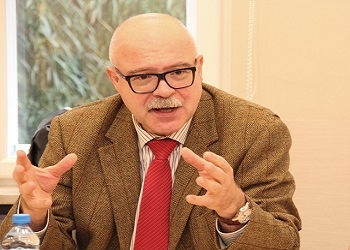
Dmitri Trenin: Carnegie Moscow Center direktörü.
Bu teşhis genel hatlarıyla doğru ama daha derin bir analize ihtiyaç var. Tarihi bilen ve uluslararası ilişkilerde Vestfalya geleneğine inanan Putin, çıkarlar dengesinin güçler dengesine dayandığını elbette bilir. Çin’in kafası bu konuda çok net. Geçen hafta Pekin’de çok-kutupluluğun boş laf olduğu, ne şimdi ne de yakın gelecekte çoklu kutupların görüldüğü konuşuldu. Gerçekte dünya yeni bir çift-kutupluluğa doğru gidiyordu. Bu defa merkezde Amerika ve Çin vardı. Ülkeler bu iki ülke arasında seçim yapacaklardı. Buna göre Avrupa ve Japonya Amerika ile ittifaka giderken, Rusya Çin’i seçecekti.
Çinlilere göre Rusya tam anlamıyla “büyük güç” değil. Toprakları, kaynakları ve ciddi bir nükleer cephaneliği olsa da gerçek bir ekonomik güce sahip değil. Rusya bu ciddi açığı telafi etmezse küresel birinci ligde oynayamayacak. Mevcut koşullarda Çin’den başka gidecek bir yeri yok. Lizbon’dan Vladivostok’a uzanan Geniş Avrupa’dan çıkınca, Şanghay’dan St. Petersburg’a uzanan Geniş Asya’ya girecek.
Vladimir Putin Rusya’nın ekonomik güç açığını gücünün üzerinde görünerek telafi etmeyi yıllarca başardı. Ama nereye kadar ? Birey olarak şu anda dünyadaki en güçlü ve deneyimli lideri olabilir ama Rusya Federasyonu aynı çapta değil. Rusya bugün gerçekten bağımsız bir oyuncu (bu ender görülen özelliği Putin’e borçlu) ama dünyanın en güçlülerinden biri değil. En iyi ihtimalle denk bir ilişki kurabilir.
Rusya Amerika, Çin veya Avrupa ile kantitatif pariteyi –mesela gayrisafi yurtiçi hasıla- hedefleyemez. Bu imkansız. Onun yerine kalitatif bakımdan, yani işçi verimliliği, bilim ve teknoloji, halkın yaşam kalitesi alanlarında kendini geliştirmeli. Putin buna yoğunlaşırsa Rusya’ya saygınlık kazandırabilir. Batı yaptırımları bunun için beklenmedik bir fırsattır. Veya bu fırsatı kaçırır ve Rusya daha fazla dibe çöker.
Amerikan karşıtı klişelerin Rusya’ya faydası yok. Rusya kendine sempatiyle bakmayan Batı kamuoyuna mesajını beyhude iletmeye çalışıyor. Rusya gücünü lidere yakınlık veya herhangi bir klana mensup olmak yerine liyakatten, ülke ve halk sevgisinden alan yeni bir ulusal elite ihtiyaç duyuyor.
Hukukun üstünlüğüne dayanan, yolsuzluktan arınmış bağımsız bir yargı ve profesyonel kolluk güçleri tarafından desteklenen adil ve şeffaf kurallara gerek var. Ülke ekonomisinin tekellerden arındırılması ; savurgan ve verimsiz devlet işletmelerine el atılması ; sorumluluk sahibi özel işletmelerin desteklenmesi ; bilim, teknoloji ve eğitim bütünlüğünün sağlanması ; halka hesap veren modern bir idari sistemin kurulması lazım. Bunların olmaması Rusya’nın kaynaklarını israf etmesi ve o çok değer verdiği bağımsızlığını –Amerika’ya değilse Çin’e- kaybetmesi anlamına geliyor.
Soru şu : Kendine kısa süre önce ülkenin “tepe milliyetçisi” adını veren Putin sahip olduğunu sınırsız güçle zorlu bir modern ulus-devlet kurma çabasına mı girecek yoksa Kremlin’in sorunlar büyüdükçe azalacak konforunun keyfini sürmeye devam mı edecek ? Son olarak, Putin’in yakın çevresinden Vyacheslav Volodin’in Valdai’de sarf ettiği Putin var oldukça Rusya da var olacak, Putin olmayınca Rusya da olmayacak sözü. Ürpertici ve zamanında yapılmış bir uyarı. Teşekkürler sayın Volodin. Umarım patronun ne anlama geldiğini biliyordur.
Çeviri : Dr. Ömer Aytek Kurmel
Cherkessia.net , 6 Kasım 2014
***
Russia’s Great-Power Problem
Dmitri Trenin
October 28, 2014, National Interest
Those who may have hoped to hear a conciliatory message from President Putin at the Valdai Club meeting in Sochi last week were disappointed. The speech was almost immediately dubbed Munich II—both in Russia and in the West. Putin appeared a wartime president, defying the U.S.-dominated global system, and supremely self-confident. He did talk about the need to agree on common global rules of the game and the relevant mechanisms for enforcing them, but this part of his remarks sounded like Sunday preaching. Basically, he demanded that the United States learn the art of self-limitation, make room for others in this world and mind its own business.
Emotionally, the centerpiece of Putin’s intervention was the lack of respect in the West for Russia and its interests: a recurrent theme with him for the better half of the decade. Essentially, he told the international audience of scholars and journalists: when Russia called itself the Soviet Union, was arming itself to the teeth with nuclear weapons and had leaders like Nikita Khrushchev, who famously banged his shoe at the UN General Assembly and came close to banging the United States with nuclear-tipped missiles, Moscow was respected, and its interests taken into account—if anything, out of fear. Now that Russia has shed communism, gotten off the backs of a dozen satellites, allowed its own fourteen borderlands to form independent states; embraced capitalism and begun moving toward democracy, its interests are being wholly ignored.
This diagnosis is generally correct, but the analysis needs to go deeper. Putin, a self-avowed student of history and a champion of the Westphalian tradition in international relations, certainly understands that the balance of interests—a phrase he should not have borrowed from Mikhail Gorbachev—rests on the balance of power or equivalent. This, by the way, is well understood in Beijing, where I heard—also last week—that the talk of multipolarity is just talk, for the lack, now or in the foreseeable future, of multiple poles. In reality, the world was moving toward new bipolarity, this time between the United States and China, with all other countries aligning themselves with either of the two poles. Thus, Europe and Japan would side with the United States; and Russia would go to China.
The way the Chinese see it, Russia is not an all-round “major power.” It has territory, resources and a sizable nuclear arsenal, for all that is worth today, but it lacks real economic strength. Unless it deals with this massive deficiency, Russia will not be able to play in the global top league. And, given the present circumstances, it will have nowhere to go other than to China. Exit Greater Europe from Lisbon to Vladivostok; enter Greater Asia from Shanghai to St. Petersburg.
For years, Vladimir Putin, a judo player, has been trying—not without success—to compensate for Russia’s deficit of economic strength with his own capacity of punching above his weight. This, however, can only go so far. As an individual statesman, he may well be the most powerful and most experienced leader in the present-day world, but the Russian Federation, which he leads, is way below that. Today, Russia, while a truly independent player (a rare quality, and Putin deserves credit for that), is not an equal of the world’s high and mighty, and thus can only wish for a co-equal relationship with them.
The idea is not to gain quantitative parity—say, in terms of GDP volumes—with America, China or Europe. This, of course, is impossible. Rather, Russia should work to advance in qualitative terms: labor productivity; science and technology power; and the general quality of life of its people. Here, Putin has a chance to elevate Russia and win respect for it, and the sanctions imposed by the West can be a godsend. Or he may blow that chance and let Russia slide even deeper.
Anti-American litanies and a Herculean—or Sisyphean—toil of getting one’s message across to a largely unsympathetic Western public will not help. What Russia needs today is a new national elite based on meritocracy and devotion to the country and its people, not proximity to a leader or membership in particular clans; it needs fair and transparent rules of the game inside the country, based on the rule of law and backed by independent courts and a professional law-enforcement apparatus, from which corruption is expunged; it needs de-monopolization of the Russian economy, with streamlining of profligate and inefficient state corporations and support for responsible private business at all levels; it needs a modern science/technology/education complex; and it needs a modern administrative system accountable to the public. Without any of this, Russia will squander its resources and ultimately lose its cherished independence: to China, if not to America.
The question is, will Putin—the country’s “top nationalist,” as he has just called himself—use his immense political capital to embark on the hard path of modern nation-building or will he continue enjoying the comfort of Kremlin control, which will gradually become more and more elusive as the problems mount? And then, finally: as Vyacheslav Volodin, Putin’s chief political aide, said at Valdai, while there is Putin, there is Russia; and when there is no Putin, there will be no Russia, either. A dire and timely warning. Thank you, Mr. Volodin. One should hope that your boss understands the implications.
Director, Carnegie Moscow Center
Bu haber toplam 2604 defa okundu.


Bu habere yorum eklenmemiştir. İlk yorumu siz ekleyin.