Karakter boyutu :


Vostok Cable:Gorbaçev Problemi

20 Aralık 2014 Cumartesi Saat 11:03
Vostok Cable, 25 Kasım 2014
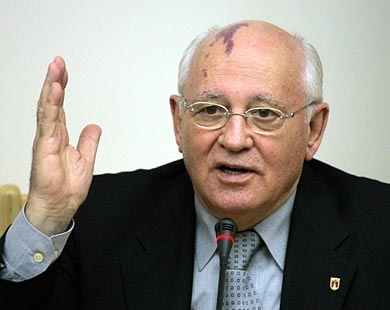
Mihail Gorbaçev Berlin Duvarı’nın çöküşünün 25. yıldönümü öncesinde Almanya’nın başkentinde düzenlenen Yeni Politika Forumu’nda bir konuşma yaptı. Andrew White’a göre konuşma en yumuşak ifadeyle provokatif olarak tanımlanabilir. Gorbaçev Rusya ile Batı arasındaki ilişkilerin bozulmasından Batı’yı sorumlu tuttu. Aşağıdaki yazı bu iddiayı değerlendiriyor.
Gorbaçev Berlin Duvarı’nın çöküşünün yıldönümünde yaptığı konuşmada son 20 yılda Batı (bilhassa Amerika) ile Rusya Federasyonu arasında doğan güven bunalımını analiz etti. Tezi basitçe şuydu : Sovyetler Birliği’nin dağılmasından bu yana Batı’nın izlediği politikalar kabarcığı “kanlı irinli yaraya” dönüştürmüştü.
Eski Sovyet liderine göreBatı önce “coşku ve zafer sarhoşluğu” içinde kendisini Soğuk Savaş’ın galibi olarak gördü. Ardından“dünyanın hakimi olduğunu ilan ettti ve basiret telkin eden seslere kulaklarını tıkadı”. Böylece Avrupa’nın şu anda yaşadığı güvenlik açmazı doğdu.
Buna karşılık Gorbaçev Rusya’yı eleştirilerden muaf tuttu. Batılı hükümetlerin Sovyetler Birliği’nin ardılına karşı yanlış politikalar uyguladıkları doğru. Ama bu hatalar tek taraflı yapılmadı. Rus siyaset yapıcıların son 20 yıl boyunca “havanın kirlenmesinden” kendilerini de sorumlu tutmaları lazım.
NATO Genişlemesinin Nüansları
Sovyetler Birliği’nin yıkılmasından sonra NATO’nun doğu yönünde genişlemesi Rus siyaset yapıcıların canını sıktı. 2009 yılına gelindiğinde Doğu Avrupa’daki eski Sovyet uydularının hepsi ittifaka girmişti Birçok Rus güvenlik analizcisine göre bu durum Rusya’nın ulusal güvenliği için ciddi bir tehditti.Ayrıca aralarında Orta Asya ve Kafkasya devletlerinin de olduğu eski Sovyet cumhuriyetlerinde NATO üsleri kuruldu. Gorbaçev, Vladimir Putin ve Rus ulusal güvenlik aygıtına göre bu genişleme 1990’lı yıllarda verilen sözlerin tutulmaması yanında, Amerika liderliğindeki Batı’nın Rusya’yı sistematik olarak zayıflatmaya çalışması anlamına geliyordu.
Bununla birlikte, analizcilerin uluslararası politikayı büyük güçlerin eylemlerinin sonuçları olarak tanımladığı bir çağda,bu devletlerin Batı ittifakına girmek veya işbirliği yapmak istemesinin sebeplerini anlamak önemli. Nitekim NATO’nun genişlemesi Amerika’nın ve ortaklarının baskısıyla açıklanamaz. NATO’nun ilk dalga genişlemesinde Doğu Avrupalı eski Sovyet uyduları üyeliği ulusal güvenliklerinin gereği olarak gördüler. Son on yılda Orta Asya’da benzer bir süreç yaşandı. Hiçbir Orta Asya ülkesi NATO’ya katılmak istediğini dile getirmese de Afganistan’ın işgali Özbekistan ve Kırgızistan gibi devletler büyük güçlerin çatışan çıkarlarından kendi menfaatleri adına yararlandılar.
Rusya Hatasını Kabul Etmeli
Kimileri bağımsız devletlerin isteklerinin önemli olmadığını söyleyebilir. Gorbaçev Avrupa güvenlik çerçevesinin büyük güçler politikasının ürünü olduğunu söylemekle yanılıyor. Başka bir noktada daha yanılıyor ; Rus güvenlik politikası son 20 yılda Avrupa güvenliğine NATO’nun genişlemesinden daha fazla zarar verdi. Rusya’nın post-Sovyet çatışmalara müdahalesi bu ülkenin eski Sovyet coğrafyası üzerindeki emellerine ilişkin kaygılar yarattı.
Rusya’nın Güney Osetya, Abhazya, Transdinyester ve Dağlık Karabağ gibi donmuş çatışmalarda oynadığı rol yanında 2008 yılında Gürcistan’ı doğrudan işgal etmesi Putin’in Ukrayna’ya müdahalesinin tarihsel arka planını oluşturuyor. Gorbaçev konuşmasında bu bağlamı unuttu.Onun yerine Batı’nın (bilhassa NATO ve Amerika)NATO’nun genişlemesi,Kosova, Avrupa’da füze savunma sistemi kurulması planı, Irak, Libya ve Suriye gibi başarısızlıklarını sıraladı.
Rusya Çıkış Yolu Aramıyor
Gorbaçev’in konuşmasının –Batı ile Rusya arasında yeniden kurmak için adımlar atılmasını önerdiği- son bölümü gerçekçi değil. Gorbaçev’e göre Rusya, Ukrayna ve AB arasındaki Minsk ateşkes antlaşmasıyla diyalog yeniden başladı.Oysa antlaşma çökmek üzere ; BM antlaşmanın imzalandığı Eylül başından bu yana binden fazla kişinin hayatını kaybettiğini tahmin ediyor.
Gorbaçev Putin’in Ekim sonunda Valdai Kulübünde yaptığı ve Batı’yı sert bir dille eleştirdiği konuşmayı “gerilimi düşürme ve ortaklık için yeni bir temel kurma arzusu” olarak değerlendirdi. Eski Sovyet lider naif bir idealist (onunla ilgili daha önce de bu değerlendirme yapılmıştı) veya Putin’i mazur göstermeye çalışıyor.
Daha geçen hafta Putin çok sayıda Batılı liderin olumsuz tutumu sebebiyle Avustralya’daki G20 zirvesini terk etmişti. Britanya Başbakanı David CameronUkrayna krizinin Rusya’yı Batı ile ilişkilerinde bir yol ayrımına getirdiğini söyledi. Kanada Başbakanı Stephen Harper daha açık konuştu ve Putin’e “Size tek sözüm şu : Ukrayna’dan çıkmanız gerekiyor” dedi. Eleştiriler karşısında bulunduğu yeri terk etmek ne “gerilimi düşürmek” ne de “ortaklık için yeni bir temel kurmak” anlamına geliyor.
Harper ve Putin’in yaşadığı türden restleşmeler Batı ile Rusya arasında gerilimi düşürmeye hizmet etmiyor. Bununla birlikte ortalığı yumuşatmak isteyenlerin bile sabrı taşıyor. Almanya Şansölyesi Angela Merkel geçen yıl boyunca Putin ile Batılı liderler arasında arabuluculuk yapma girişimi başarısız oldu. Putin ise Ukraynalı isyancılara Rus desteğini artırdı ve gerilimi düşürme çabalarını engelledi.
Sonunda Merkel’in sabrı kalmadı ve 17 Kasım’da Sidney’deki Avustralyalı bir düşünce kuruluşunda yaptığı konuşmada düşüncelerini dile getirdi. Rusya’nın Ukrayna’da uluslararası hukuku açıkça ihlal ettiğini söyleyen Şansölye mevcut krizin “Ukrayna ile sınırlı olmadığını, Moldova ve Gürcistan’la da ilgili olduğunu, böyle devam ederse Sırbistan ve Batı Balkanlar’la da ilgili olacağını” kaydetti.
Yeni Bir Güvenlik Sistemi İçin Fazla Umut Yok
Gorbaçev’in Berlin Duvarı’nın çöküşünün yıldönümünde yaptığı konuşmayı nasıl yorumlamalı ?Rusya ilişkilerin zehirlenmesinden sadece Batı’nın sorumlu olduğu tezi ciddiye alınamaz. Son 25 yıl boyunca iki tarafın yaptığı hatalarla dünya bu noktaya geldi. Batı ile Rusya arasındaki ilişkilerin üzerine kar yağarken Gorbaçev ve Rusya liderliğinin büyük kısmı bu basit gerçeği kabul etmekte zorlanıyor.
Merkel’in dediği gibi bugünkü kriz sadece Ukrayna ile ilgili değil. Batı’nın Rusya’nın saldırganlığına vereceği tepki eski Sovyet coğrafyasındaki diğer çatışmalar üzerinde de belirleyici olacak. Gorbaçev Avrupa’da AB ve NATO’nun yerini alacak yeni bir güvenlik sisteminin kurulacağını umsa da Rusya otoriter çizgisini sürdürdükçe Batı ile çatışma ihtimali büyüyecek.
Çeviri : Dr. Ömer Aytek Kurmel
Cherkessia.net, 20 Aralık 2014
******
The Gorbachev Problem
Vostok Cable
November 25, 2014
Mikhail Gorbachev recently gave a speech to the New Policy Forum symposium in Berlin on the eve of the 25th anniversary of the collapse of the Berlin Wall. According to Andrew White, that speech can be described at the very least as provocative. Here he assesses the claim that the souring of relations between Russia and the West is the result of Western actions.
Gorbachev’s thesis for explaining the breakdown of trust between the West (particularly the United States) and the Russian Federation over the past 20 years, from his speech on the anniversary of the fall of the Berlin Wall, is simple: the blister turned into a “bloody, festering wound” exclusively because of actions taken by the West since the collapse of the Soviet Union.
In support of his thesis, the aging former Soviet leader makes the case that the West’s “euphoria and triumphalism” in declaring victory in the Cold War led leaders to “[claim] monopoly leadership and domination in the world, refusing to heed words of caution from many of those present here.” This in turn, led to the security dilemma Europe currently faces.
However, Gorbachev’s argument is completely devoid of any criticism of Russian policy in the post-Cold War era. It is true that Western governments have made missteps in the policies they pursued towards the Soviet Union’s successor state. But those missteps were not made in a vacuum. Russian policymakers must also accept blame for the “poisoning of the well” that has occurred over the past twenty years.
The Nuances of NATO Expansion
The expansion of NATO into Eastern Europe and beyond has troubled Russian policymakers since the collapse of the Soviet Union. By 2009, all of the former Soviet satellite states in Eastern Europe had joined the western-dominated security organization, a reality which many Russian security analysts saw as a significant threat to Russian national security. In addition, NATO bases were being established in countries throughout the former Soviet Union, including in multiple Central Asian and Caucasian states. For Gorbachev, Vladimir Putin and the Russian national security apparatus at large, this expansion was a violation of promises made in the 1990s not to do so and represented a concerted Western push (led by the United States) to marginalize the power of the Russian state.
However, in an age when analysts are all too often willing to describe international politics as the product of actions by great powers, it is important to understand the reasons why these states sought to enter or collaborate with western-oriented security organizations. Indeed, NATO expansion cannot be seen as a process by which the United States and its partners coerce membership in or participation with western-oriented security organizations. During the first wave of NATO enlargement, the former Soviet satellites of Eastern Europe were eager to join, seeing membership as a crucial contributor to their own national security. A similar situation has played out in Central Asia over the past decade. While no Central Asian state has expressed interest in joining NATO, the invasion of Afghanistan provided states like Uzbekistan and Kyrgyzstan with an opportunity to exploit the competing interests of several great powers to their own benefit.
Russia Must Share The Blame
Some may argue that the aspirations of these independent states are irrelevant. The way Gorbachev frames the European security complex wrongly insists it is the product of great power politics. But his thesis fails on another front as well—Russian security policy has done more to destabilize the European security complex over the past two decades than any aspect of NATO’s expansion. Its involvement in numerous post-Soviet conflicts has made states wary of Russia’s objectives throughout post-Soviet space.
Russian participation in the region’s frozen conflicts, particularly South Ossetia, Abkhazia, Transnistria, and Nagorno-Karabakh as well as its outright invasion of Georgia in 2008 forms the historical context behind Putin’s current involvement with Ukraine. Gorbachev seems to forget about this context in his speech. Instead, he only mentions a “shortlist” of failures perpetuated by the West (particularly NATO and the United States)—NATO enlargement, Kosovo, the plan for a missile defense shield in Europe, Iraq, Libya and Syria.
Russia Is Not Really Looking For A Way Out
The last part of Gorbachev’s speech, in which he seeks to outline ways to move forward and reestablish meaningful dialogue between the West and Russia, is unrealistic. Gorbachev claims that the Minsk ceasefire agreement between Russia, Ukraine and the EU is a modest sign of a renewed dialogue. Instead, the agreement is crumbling—according to UN estimated more than 1,000 people have been killed since the ceasefire was signed in early September.
Similarly, Gorbachev’s more powerful claim – that a speech Putin gave to the Vladai Forum in late October (despite its harsh criticism of the West and the United States in particular) signaled a “desire to find a way to lower tensions and ultimately to build a new basis for partnership” – make the independent-minded former Soviet president seem, at best, a naïve idealist (something he has been called before), and at worst an apologist for the Putin regime.
Just last week, Putin left the G20 summit in Australia after numerous western leaders confronted the Russian president over the situation in eastern Ukraine. British Prime Minister David Cameron is reported to have told Putin that the crisis represented a “fork in the road” for Russia’s relationship with the west, while Canadian Prime Minister Stephen Harper was less prosaic, simply saying to Putin, “I have only one thing to say to you: You need to get out of Ukraine.” Fleeing in the face of criticism does not ring akin to a “desire to lower tensions” nor an attempt to “build a new basis for partnership.”
Confrontations like those between Harper and Putin are not a helpful way to ease tensions between the West and Russia. However, even someone who has tried to take a moderating approach to the situation is running out of patience. German Chancellor Angela Merkel has tried throughout the past year to mediate between Putin and the Western leaders with little success. Instead, Putin has moved forward by escalating Russian support for the Ukrainian rebels and continues to thwart any effort to deescalate.
Merkel, despite her best efforts, has finally run out of patience and said as much on November 17, in a speech to an Australian think tank in Sydney. Describing Russian action in Ukraine as a clear violation of international law, the Chancellor said that the current crisis is “not just about Ukraine. This is about Moldova, this is about Georgia, and if this continues that one will have to ask about Serbia and one will have to ask about the countries of the Western Balkans.”
Little Hope For A New Security System
So, in total, what can we make of Gorbachev’s speech on the anniversary of the collapse of the Berlin Wall? Simply, the thesis that the West is solely responsible for poisoning its relationship with Russia is unsubstantiated. Mistakes have been made on both sides over the past twenty-five years that have brought the world to this point. But as the frost begins to settle again in the realm of Western-Russian relations, for Gorbachev and much of the Russian leadership, that simple truth is difficult to acknowledge.
As Merkel said, the current crisis is not just about the situation in Ukraine. How the West responds to Russian aggression has important implications for other conflicts in former Soviet space. While Gorbachev might see hope in the idea of creating some new system of European security that supersedes the EU and NATO, the truth of the matter is that as long as Russia continues down the authoritarian path that it is on, the likelihood of conflict with the West will only grow.
Bu haber toplam 2777 defa okundu.


Recep Yurdakul
Bence iddia ciddi değil ama söz konusu şey çok ciddi. İlk düğmeye basacakların çıldırmış olması gerekir. Hala anlaşılmayan bir şey artık RF bir sosyalist devlet değil. Rus eliti bir türlü bunu anlamıyor. İlkel bir kapitalizm var ama yinede kapitalizm bunun adı. NATO bunların sayesinde can suyu buldu. NATOya katılmak isteyenlerin başında geliyorlardı. NATO gözlemcisiydiler daha geçen günlere kadar. Birden iktidar denizi bitti Putin için hemen eski defterlerden çıkan modası geçmiş politikaları devreye soktular. RF batı tipi bir demokrasiye geçseydi ne NATO kalırdı ne de NATO tehlikesi.
15 Ocak 2015 Perşembe Saat 01:10