Karakter boyutu :


Merkez Güçlerin K. Kafkasya’ya Dönük Politikası 1914–1917 (II.BÖLÜM)

25 Ocak 2015 Pazar Saat 23:50
George Mamulia , January 18, 2013
Kafkasyalılar 1916 yılında faaliyetlerini daha da artırdılar. O yıl İsviçre’nin Lozan kentinde “Rusya Rus-Olmayan Halklar Birliği” (Ligue des nationalités allogènes de Russie) kuruldu. Kurucular Litvanyalı yutsever Juozas Gabrys-Paršaitis ve Alman asıllı Letonyalı Baron Friedrich von der Ropp idi. 1916 baharında kurulan bu örgüt Promete hareketinin öncülüydü. Birlik Almanya Hariciyesinden maddi yardım almasına rağmen koşulsuz biçimde Berlin yanlısı değildi. Örgütün amacı Rusya İmparatorluğu’nu ulusa devletlere ayırarak yayılmacılığa son vermekti.
Baron von der Ropp “Almanya’nın işgali altındaki halklar ve topraklar hiçbir şekilde ilhak edilmeyecekti. Öncelikle bağımsız olacaklardı” dedi (Friedrich von der Ropp, Zwischen Gestern und Morgen. Erfahrungen und Erkentnisse, Stuttgart, 1961, s. 103).
Bu projenin hayata geçirilmesi için,bağımsızlık isteyen Rus-olmayan halkların mülteci komiteleri uluslararası bir örgüt içinde bir araya getirilmeli, sadece Merkez Güçler (İttifak Devletleri) değil, en başta Müttefikler ve tarafsız ülkeler nezdinde Rusya emperyalizmine karşı yoğun propaganda faaliyeti yürütülmeliydi (S. Zetterberg, Die Liga der Fremdvölker Russlands 1916–1918, Ein Beitrag zu Deutschlands antirussischem Propagandakrieg unter der Fremdvölkern Russlands im Ersten Weltkriegs, Helsinki, 1978, s. 70).
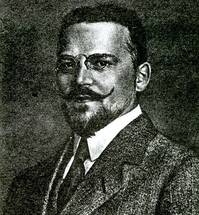
Rusya Rus-Olmayan Halklar Birliği eş-kurucusu Juozas Gabrys-Paršaitis
Birliğin ilk dış politika girişimi Mayıs 1916’da ABD Cumhurbaşkanı Woodrow Wilson’a yapılan çağrıydı. Amerikalı liderden Rus-olmayan halkların kendi kaderini tayin haklarını desteklemesi istendi. Cumhurbaşkanı Wilson ülkesini savaşın dışında tutmak istiyor bir yandan da barış çağrısı yapıyordu. Dünyada barış yanlısı bir lider olarak tanınıyordu.
Çağrı metninde Rus emperyalizminin ve Çar otokrasisinin Fin, Baltık, Belarus, Polonya, Rusya Yahudileri, Ukrayna ve Rusya’nın Müslüman halklarına (Tatarlar, Başkurtlar, Kırgızlar, Sartlar [Özbekler ve Karakalpaklar], Tacikler, Türkmenler, Kafkasyalı Dağlı Halklara) ve Gürcülere karşı işlediği suçlara ve yaptığı haksızlıklar yer alıyordu.
Kafkasya Komitesi’nin de dahil olduğu Rusya’nın ezilmiş Müslüman halklarının temsilcileri 25 milyon Müslüman’ın özgür yaşama hakkını korumak için birleştiklerini dile getiriyordu :
Rusya hükümetinin baskısı bizde görülmemiş bir dayanışma duygusu uyandırdı. Bu baskıyı hep birlikte kınıyoruz.
En değerli mirasımız olan dinimizin gereklerini yerine getirme özgürlüğüne sahip değiliz. Ruslar 1892 yılında Kur’an metnini değiştirmek istediler. Yasaların tanıdığı siyasal haklarımız dikkate alınmıyor. Maddi ve entelektüel gelişimimiz engelleniyor. Askerlik, yönetim, yargı ve serbest meslek alanlarında katılımımız kısıtlanıyor. Topraklarımıza tazminatsız el kondu ve ayrıcalıklı kastlara verildi. Savaşın başından bu yana adaletin gölgesi bile kalmadı. Ayrımcılığa uğruyor, kötü muamele görüyoruz (Appel des allogènes de Russie au Président des Etats-Unis d’Amérique, à Washington, Mai 1916, In : J. Gabrys., Vers l’indépendance Lituanienne, Faits, impressions, souvenirs 1907–1920, Lausanne, 1920, pp. 280–281).
Çağrı Avrupa’da olduğu gibi Rusya’da da ses getirdi. Duma’da tartışmalara sebep oldu. Bazı üyeler çağrının gerçekleri yansıttığını kabul ettiler.
“Rusya Rus-Olmayan Halklar Birliği” üyesi Kuzey Kafkasya temsilcileri 27-29 Haziran 1916’da Lozan’da düzenlenen “Milliyetler Birliği”(L'Union des Nationalités) üçüncü konferansında kendilerini daha iyi ifade etme fırsatı buldular (S. Zetterberg, Die Liga der Fremdvölker Russlands 1916–1918, Ein Beitrag zu Deutschlands antirussischem Propagandakrieg unter der Fremdvölkern Russlands im Ersten Weltkriegs, sf. 60–61, 91–92).
Paris’te 1912 yılında daha önce anılan Juozas Gabrys and Fransız gazeteci Jean Pélissier tarafından kurulan Milliyetler Birliği’nin amacı –sadece Rusya’daki değil, tüm dünyadaki- küçük ulusların sorunlarını ve tarihlerini Batı kamuoyuna duyurmaktı. Milliyetler Birliği 1916 yılında Lozan’a taşındı.
Milliyetler Birliği tarafsız İsviçre’de savaşta taraf olan Fransa’ya nazaran daha rahat hareket edebilecekti.
Konferansa Çar İmparatorluğu’nun Rus-olmayan halkları yanında Alsaslılar, Arnavutlar, Basklar, Belçikalılar, Çingeneler, Çekler, Ermeniler, Hırvatlar, İrlandalılar, Katalanlar, Lüksemburglular, Rumenler, Sırplar, Suriyeliler ve Tunuslularkatıldı. Merkez Güçler (İttifak Devletleri) yönetimi altında yaşayan ve Müttefiklere meyleden halklar da konferansta temsil ediliyordu (G. Jäschke, Les peuples opprimés de la Russie et la Conférence de Lausanne en 1916, In: Prométhée. Organe de défense nationale des Peuples du Caucase, de l’Ukraine et du Turkestan, Paris, 1937, no. 132, sf. 17–19).
Temsil edilen Rus-olmayan halklar arasında Polonyalılar, Finler, Letonyalılar, Litvanyalılar, Ukraynalılar, Belaruslar, Yahudiler, Gürcüler, Çerkesler, Dağıstanlılar, Tatarlar, Kırgızlar ve Buhara Emirliği’nden Özbekler vardı.
Rusya mahkumu halklar ilk andan itibaren izleyicilerin dikkatini müşkül durumlarına çekmeyi başardılar. Temsilcilerden Çerkes İsmail Bidanuk, Dağıstanlı Seyid Tahir el-Hüseyni ve Kumuk Ahmet Bey Kaplan-Zade Rusya İmparatorluğu’nun Dağlı halklara karşı işlediği insanlık dışı suçlara ilişkin ayrıntılı bilgi sundular. Güneye doğru ilerleyen Rus yayılmacılığı karşısında bağımsızlığını korumaya çalışan bu halkların Petersburg tarafından bilinçli olarak yok edilmek istendiğini anlattılar (Compte rendu de la IIIme Conférence des Nationalités réunie à Lausanne 27–29 juin 1916, Publié par l’Office centrale de l’Union des Nationalités, Lausanne, 1917, sf. 89–99, 156–157).
Kafkasyalı yurtseverler propaganda faaliyeti yürütürken bir yandan da Merkez Güçleri Kafkasya’nın sorunları hakkında bilgilendirmeye çalıştılar.
Bu bağlamda, Avusturya-Macaristan İmparatorluğu Dışişleri Bakanlığı arşivlerinde bulunan “Esaret Altındaki Kuzey Kafkasyalı Dağlı Halklar Hakkında” başlıklı rapor özellikle önemlidir. Rapor Kuzey Kafkasya ulusal hareketi aktivistlerinden olan ve Uzden Hacı Murat Gazavat takma adını kullanan Çeçen Arsamakov tarafından 1916 baharında kaleme alınmıştır (HHStA, PA, I 947 Krieg 21 k Türkei: Georgisch-grusinischer Aufstand im Kaukasus 1914–18, Fol. 126–131).
Arsamakov söz konusu raporu Kafkasya Komitesi üyeleriyle birlikte İstanbul’daki Almanya ve Avusturya-Macaristan hariciye mensuplarına verdikten sonra bir Alman denizaltısıyla geldiği Gürcistan’ın Anaklia kentinde karaya çıktı. Arsamakov Gürcistan’dan Kuzey Kafkasya’ya geçti ve Alman kaynaklarına göre küçük bir isyancılar grubu kurdu (W. Bihl, Die Kaukasus-Politik der Mittelmächte, Vol. I, Ihre Basis in der Orient-Politik und ihre Aktionen 1914-1917, p. 72).
Gürcü kaynaklarına göre Arsamakov Mayıs 1917’de Kuzey Kafkasya ve Dağıstan Dağlılar Birliği’nin ilk kongresine katıldı (Shalva Amiredjibi (1886-1943), Tbilisi, 1997, Vol. I, s. 272).
1917 yazında Kafkasya’dan dönen Gürcü özel temsilcilerden biri Almanlara Arsamakov’un grubuyla birlikte bir Rus askeri konvoyuna saldırdığını ve bir cephaneliği havaya uçurduğunu söyledi(W. Zührer, Deutschland und die Entwicklung Nordkaukasiens in Jahre 1918, Jahrbücher für Geschichte Osteuropas, Neue Folge, Bd. 26, Jahrgang 1978, s. 33). Kuzey Kafkasya ve Dağıstan Dışişleri Bakanı Haydar Bammat’a göre Arsamakov 1918 yazında Almanya’da bulunuyordu ve Kuzey Kafkasya’nın bağımsızlığının tanınması için çalışıyordu (Sojuz ob’edinennih gorcev Severnogo Kavkaza i Dagestana (1917-1918), Gorskaija respublika (1918-1920). Dokumenti i materialy [Union of the United Mountaineers of the North Caucasus and Dagestan (1917-1918), Mountaineers Republic (1918-1920). Documents and Sources], Makhachkala, 1994, s. 152–153).
Görüldüğü gibi Merkez Güçler 1914-1917 arasında Kuzey Kafkasya’ya dönük faal bir politika yürüttüler.
Daha kapsamlı bir çalışmayı Osmanlı İmparatorluğu’nda yaşayan Kuzey Kafkasyalı muhacirlerin çocukları sürdürdü. Asker-sivil elitin parçası olan bu insanlar sadece İstanbul değil, Berlin’in kararlarında da belirleyici olmaya çalıştılar.
Bu süreçte Kafkasya Konfederasyonu ve bağımsızlığı fikri şekillendi, hem Merkez Güçler (İttifak Devletleri) hem Antant (İtilaf Devletleri) nezdinde savunuldu.
Bu siyaset Osmanlı ve Almanya İmparatorlukları’nın 1918 yılında Kafkasya’ya askeri müdahalelerinin zeminini hazırladı.
Makalenin I. Bölümünün linki: http://cherkessia.net/makale_detay.php?id=3507
Dr. George Mamulia: Siyaset bilimci ve eski diplomattır. 1995-2000 arasında Moskova’daki Gürcistan Büyükleçiliği’nde görev yapmıştır. Ayrıca eski Gürcistan Devlet Başkanı Eduard Şevardnadze’nin dış politika danışmanlığı görevinde bulunmuştur.
Çeviri : Dr. Ömer Aytek Kurmel
Cherkessia.net, 25 Ocak 2015
****
The Central Power’s Policy Toward the North Caucasus, 1914–1917 (Part Two)
George Mamulia, January 18, 2013
The Caucasians were even more active in 1916, when “The League of Non-Russian Peoples of Russia” (Ligue des nationalités allogènes de Russie) was founded in Lausanne, Switzerland. This organization, which may, without exaggeration, be called the forerunner of the later Promethean movement, was founded in the spring of 1916 by Lithuanian patriot Juozas Gabrys-Paršaitis and the German-Latvian Baron Friedrich von der Ropp. Although the leaders of the league received financial support from the German Ministry of Foreign Affairs, that did not imply an unconditional acceptance of Berlin’s foreign policy. The purpose of the league was the final destruction of Russian imperialism by splitting up the empire into its component parts. Hence, the dismantling of the empire was to be carried out on the basis of a genuine liberation of the non-Russian peoples.
“The peoples and territories already conquered by the German army should under no circumstances be subjected to annexation. Those people must obtain independence first,” Baron von der Ropp intimated (Friedrich von der Ropp, Zwischen Gestern und Morgen. Erfahrungen und Erkentnisse, Stuttgart, 1961, p. 103).
In order to implement this project, the émigré committees of all the non-Russian peoples fighting for their independence, were to be brought into an international league, running intensive propaganda against Russian imperialism, not only in the Central Powers, but, above all, in the Allied and neutral countries (S. Zetterberg, Die Liga der Fremdvölker Russlands 1916–1918, Ein Beitrag zu Deutschlands antirussischem Propagandakrieg unter der Fremdvölkern Russlands im Ersten Weltkriegs, Helsinki, 1978, p. 70).
The first foreign policy act of the League was an appeal made in May 1916 to the President of the United States Woodrow Wilson asking for his support for the non-Russian peoples’ right to national self-determination. President Wilson was known for his attempts to keep the United States out of war but also for his calls to peace, which had given him a worldwide reputation as a peacemaker.
The text of the address consisted of a brief list of the injustices and crimes committed by Russian imperialism and the Tsarist autocracy against the Finns, the Balts, Belarusians, Poles, Russian Jews, Ukrainians and Muslim peoples of Russia (Tatars, Bashkirs, Kyrgyz, Sart [Uzbek and Karakalpak], Tajiks, Turkmens, Mountain Peoples of the Caucasus) and Georgians.
Addressing the US president, representatives of the oppressed Muslim peoples of Russia, including the representatives of the Caucasian Committee in Turkey, stressed that Russia’s Muslims, 25 million in total, were united in their determination to defend their right to free existence:
The oppression by the Russian Government has awakened among us a sense of solidarity never seen before. We all protest against this oppression.
We have no freedom to fulfill our religious obligations—our dearest heritage. In 1892, the Russians wanted to change the text of the Koran. Our political rights, recognized by the laws, are in no way taken into account. Our material and intellectual development is being thwarted. Our participation in the military, the administration, the courts and liberal professions restricted. Our lands were confiscated without compensation and given to privileged castes. Since the war began, there has not even been a shadow of justice for us. We are being haunted, mistreated, without any judicial recourse (Appel des allogènes de Russie au Président des Etats-Unis d’Amérique, à Washington, Mai 1916, In : J. Gabrys., Vers l’indépendance Lituanienne, Faits, impressions, souvenirs 1907–1920, Lausanne, 1920, pp. 280–281).
It is interesting to note that this appeal had a deep echo in Europe as well as in Russia itself, where it became the subject of a debate in the Duma: some of its members were even forced to acknowledge that the information carried by the appeal was essentially true.
The representatives of the peoples of the North Caucasus who had joined the “League of the Non-Russian Peoples of Russia” expressed themselves even more forcefully at the third conference of “The Union of Nationalities” (L'Union des Nationalités), held in Lausanne on June 27–29, 1916 (S. Zetterberg, Die Liga der Fremdvölker Russlands 1916–1918, Ein Beitrag zu Deutschlands antirussischem Propagandakrieg unter der Fremdvölkern Russlands im Ersten Weltkriegs, pp. 60–61, 91–92).
Founded in 1912 in Paris by the already mentioned Juozas Gabrys and French journalist Jean Pélissier, the Union of Nationalities, which aimed at familiarizing the Western public with the national question and the history of the small nations—not only in Russia but throughout the whole world—had moved to Lausanne in 1916.
Switzerland’s neutral status offered the Union’s leadership wider leeway in comparison with France, a state involved in one of the warring camps.
It is worth mentioning that along with the non-Russian peoples of the Tsarist Empire, the conference was also attended by Albanians, Turkish Armenians, Alsatians, Basques, Belgians, Catalans, Gypsies, Irishmen, Luxembourgers, Romanians, Syrians, Czechs, Tunisians, Serbs and Croats, i.e. a substantial representation of peoples under the yoke of the Central Powers who were inclined to favor the Allies (G. Jäschke, Les peuples opprimés de la Russie et la Conférence de Lausanne en 1916, In: Prométhée. Organe de défense nationale des Peuples du Caucase, de l’Ukraine et du Turkestan, Paris, 1937, no. 132, pp. 17–19).
Among the delegates representing the non-Russian peoples of the Russian Empire were Poles, Finns, Latvians, Lithuanians, Ukrainians, Belarusians, Jews, Georgians, Circassians, Dagestanis, Tatars, Kyrgyz and Uzbeks from the Emirate of Bukhara.
The representatives of the peoples subjugated by Russia succeeded from the very beginning in drawing the audience’s attention to their plight. The accounts provided by representative of the Circassians Ismail Bedanok, Dagestani delegate Seid Tahir al-Husseini and representative of the Kumyks Ahmed Bey Kaplan-Zadeh, not only contained historical data exposing the inhumanity of the crimes committed by the Russian Empire against the Mountaineer Peoples of the Caucasus. Those reports also provided a qualified and comprehensive analysis of the tragedy that had befallen the peoples of the North Caucasus in the 19th century. Their analysis clearly lays out a deliberate and conscious policy of Petersburg, aimed at the physical destruction of peoples whose only fault was their desire to preserve their independence in front of a rapidly progressing southward wave of Russian imperialism (Compte rendu de la IIIme Conférence des Nationalités réunie à Lausanne 27–29 juin 1916, Publié par l’Office centrale de l’Union des Nationalités, Lausanne, 1917, pp. 89–99, 156–157).
Along with conducting propaganda activities, the Caucasian patriots did everything they could to acquaint as much as possible the political circles of the Central Powers with the problems of the Caucasus.
In this respect, the report “On the enslaved status of the Mountaineer peoples of the North Caucasus,” found in the archives of the Ministry of Foreign Affairs of the Austro-Hungarian Empire, deserves particular mention. It was written in the spring of 1916 by one of the activists of the North Caucasian national liberation movement, the Chechen Arsamakov under the pseudonym Uzden’ Haji Murad Gazavat (HHStA, PA, I 947 Krieg 21 k Türkei: Georgisch-grusinischer Aufstand im Kaukasus 1914–18, Fol. 126–131).
It is interesting to note that immediately after this document had been presented to representatives of the German and Austro-Hungarian foreign affairs ministries in Constantinople, Arsamakov, along with the above-mentioned members of the Caucasian Committee in Turkey, the Georgian George Machabeli and the Azerbaijani Selim Bey Bebutov, secretly disembarked from a German U-boat at Anaklia, on the Black Sea coast of Georgia. From Georgia, Arsamakov moved to the North Caucasus, where he, according to German sources, managed to form a small group of local rebels (W. Bihl, Die Kaukasus-Politik der Mittelmächte, Vol. I, Ihre Basis in der Orient-Politik und ihre Aktionen 1914-1917, p. 72).
In May 1917, still according to Georgian sources, he took part in the first congress of the Union of the Mountaineers of the North Caucasus and Dagestan (Shalva Amiredjibi (1886-1943), Tbilisi, 1997, Vol. I, p. 272).
In the summer of the same year, one of the Georgian emissaries returning from the Caucasus told the Germans that Arsamakov, with his unit, had executed a successful attack on a Russian military convoy and destroyed an ammunition depot (W. Zührer, Deutschland und die Entwicklung Nordkaukasiens in Jahre 1918, Jahrbücher für Geschichte Osteuropas, Neue Folge, Bd. 26, Jahrgang 1978, p. 33). According to Haidar Bammat, the minister of foreign affairs of the North Caucasus and Dagestan, in the summer of 1918, Arsamakov was in Germany, where he was doing his best to facilitate Berlin’s recognition of the independence of the North Caucasus. (Sojuz ob’edinennih gorcev Severnogo Kavkaza i Dagestana (1917-1918), Gorskaija respublika (1918-1920). Dokumenti i materialy [Union of the United Mountaineers of the North Caucasus and Dagestan (1917-1918), Mountaineers Republic (1918-1920). Documents and Sources], Makhachkala, 1994, p. 152–153).
Thus one can see that in 1914–1917, the Central Powers conducted an active policy toward the North Caucasus.
In this respect, the greater part was played by the descendants of the North Caucasian Muhajirs residing in the Ottoman empire, many of whom, holding high posts in the Turkish political and military elite of this time, tried, wherever possible, to influence the decisions not only in Istanbul but also in Berlin.
It was at that time that the idea of creating a unified Confederation of the Caucasus took shape in the form of memoranda and notes, outlined by advocates of Caucasian independence and addressed to the governments of the Central Powers as well as of the Entente.
Consequently, this policy prepared the ground for the impending military intervention of the Ottoman and German Empires in the Caucasus in 1918.
Dr. George Mamulia is a politologist, a Former State Counselor of foreign affairs of the personal staff of the President of Georgia (in the period of Eduard Shevardnadze) and a former diplomat. He worked in the Embassy of Georgia in Moscow in 1995-2000.
Bu haber toplam 3029 defa okundu.


Bu habere yorum eklenmemiştir. İlk yorumu siz ekleyin.