RFE/RL, 20 Haziran 2015
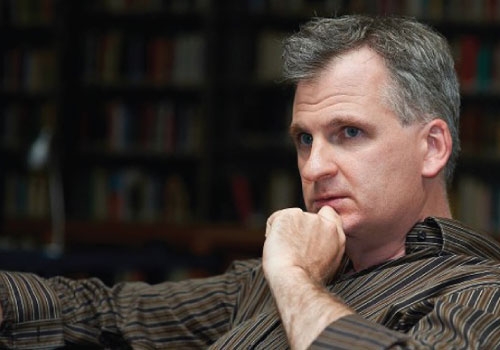
Yale Üniversitesi tarih profesörü Timothy Snyder Ukrayna’daki çatışmanın beklenmedik “şöhretlerinden” biri haline geldi.
Vladimir Putin Rusya’sının Doğu Avrupa tarihine ilişkin anlatısını düzeltmek amacıyla bir dizi makale kaleme aldı, düzinelerce konuşma yaptı. “Kanlı Topraklar : Hitler ve Stalin Arasında Avrupa” kitabını yazdı. Putin’in “Ukrayna gerçek bir ülke değildir” şeklinde ifade ettiği Rusya tezine karşı tek kişilik bir mücadele yürütüyor.
Snyder Özgür Avrupa/Özgürlük Radyosu Rusça Servisi muhabiri Yaroslav Shimov’a verdiği söyleşide tarih yorumlarının Ukrayna’daki çatışmalara etkisi ve Rusya hükümetinin “tarih anlatısı üzerinde tekel kurma” girişiminin yarattığı tehlike hakkında konuştu.
Özgür Avrupa/Özgürlük Radyosu : Kitabınız 1930’lu ve 1940’lu yıllarda Rusya ve Batı’nın Doğu Avrupa üzerine mücadelesini anlatıyor. Tarih tekerrür mü ediyor ?
Timothy Snyder : Kitap Rusya ve Batı hakkında değil. Sovyet projesinin kendisi Batılı bir projeydi. Sovyet liderliği ülkenin geri kaldığını düşünüyor ve onu modernleştirmek istiyordu.
Kanlı Topraklar kitabı iki rakip sömürgeleştirme projesini anlatıyor. Bunlar Sovyet ve Nazi projeleri. İkisi de toprakları istila, halkları esir etti. Aralarındaki fark Sovyetlerin yüzünün geleceğe, Nazilerin geçmişe dönük olmasıydı.
“Kanlı Topraklar” dediğim ve Rusya’nın batısı, Baltıklar, Belarus, Ukrayna ile Polonya’nın büyük bölümünden oluşan bölgenin özelliği her iki projeyle temas etmiş olmasıdır. Mesele Batı ve Doğu değil, temas edilen projelerdir.
Bugünkü rekabet farklı. Avrupa Birliği sömürgecilikten kurtulmak, devletlerin eşit muamele görmesi anlamına geliyor. Avrupa Birliği’ne katılan ülkeler belli haklara sahip olurlar. Mesela iç pazara erişim hakkı kazanırlar. AB Batılı bir önermedir ve Batı kaynaklı birçok olumsuzluktan farklıdır.
Rusya Sovyetler’den farklı bir şey öneriyor. Sovyetler gibi modernleşme önermiyor. Rusya dünyanın ulus-devletlerden oluşmasını, güçlünün ve zayıfın belli olacak şekilde rekabet etmelerini istiyor.
Ukrayna’nın Rusya’dan zayıf olduğuna inandığı için bağımsızlığına itiraz ediyor. AB’ne de karşı çıkıyor. Moskova gerçek güç olarak ulusları görüyor. Bu yüzden AB projesinin temellerinin çürük olduğuna inanıyor.
Önümüzde Batılı ve Doğulu iki önerme var. Bunlar otuzlu ve kırklı yılların önermelerinden farklı. Temel fark ise Ukrayna’nın –istila edilmesine rağmen- bu iki seçenek arasında tercih yapabilecek durumda olmasıdır.
Yale Üniversitesi tarih profesörü Timothy David Snyder Rusya’nın “Ukrayna gerçek bir ülke değildir” tezine karşı tek kişilik bir mücadele yürütüyor.
Özgür Avrupa/Özgürlük Radyosu : Ukrayna’nın Sovyet geçmişinden arınmak için girdiği radikal süreç hakkında ne düşünüyorsunuz ? Ukrayna ulusal kimliğini güçlendirir mi, ayrıştırır mı ?
Timothy Snyder : Farklı bir yerden başlayayım. Ukrayna ulusal kimliğini devlet veya tarih yasaları inşa etmeyecek. Ukrayna ulusal kimliği Ukraynalılar’ın tarihsel deneyimlerinin toplamıdır. Bugün yaşananlar geçmişte yaşananlardan çok daha önemlidir.
Politik ulusa mensup olma bilinci zaten vardı. Maidan ve Rusya istilası deneyimleri bu bilinci pekiştirdi. Uluslar böyle inşa edilir. Deneyimlerden doğarlar. Yukarıdan sahte deneyimler dayatılamaz.
Arınma yasalarının Ukraynalı kimliğine hiçbir etkisi olmayacak. Almanya örneği de dahil olmak üzere bellek yasalarının tümüne karşıyım. Çünkü her hangi bir şeyi tartışılmaz hale getirince sivil toplumda özgür tartışmanın normal olduğu ilkesinden ödün verirsiniz.
Ukrayna’da sorun ulusal kimlik değil, devlet. Bellek veya arınma yasaları çıkarmak yerine yolsuzluk ve oligarşiyle mücadele edilmesi, bürokrasinin işlevsel kılınması ve hukukun üstünlüğünün tesis edilmesi gerekiyor.
Özgür Avrupa/Özgürlük Radyosu : Tarihin –özellikle İkinci Dünya Savaşı’nın yorumu- Rusya ile Doğu Avrupa ülkeleri arasında bir tartışma başlattı. Bu bir kader mi ?
Timothy Snyder : Rusya ve komşuları arasındaki çelişki tarihin farklı yorumlanmasıyla sınırlı değil. İkinci Dünya Savaşı Polonya ve Litvanya’da da farklı algılanıyor.
Ama bu ülkelerin tarihçileri arşivleri özgürce kullanabiliyorlar. İfade özgürlüğüne sahipler. Kimse onları tarihi çarpıtmakla suçlamıyor. Farklılıklarına rağmen konferanslarda bir araya geliyor, görüş alışverişinde bulunuyor, hatta bakış açılarını değiştirebiliyorlar.
Bu herkes aynı şeyi düşünecek demek değil. Tarih özgürce tartışılırsa sorunlar üst seviyeye taşınır. Tarih ulusal çerçeveden çıkar, Avrupa bağlamında konuşulmaya başlanır.
Rusya’nın farkı diğer halklar gibi düşünmemeleri değil. Amerikalılar ve Kanadalılar da farklı tarih yorumlarına sahipler.
Rusya’da devlet, tarih bilgisi ve yorumu üzerinde tekel kurmak istiyor. ‘Bugün’ (bugün vurgusu önemli) söylediği şeylere katılmayan herkes Rusya devletine göre “tarihi çarpıtıyor.”
Rusya başka ülkeler adına da konuşuyor. Mesela Prag Baharı’nın Batı’nın komplosu olduğunu iddia ediyor. Moskova Sovyetler Birliği’ni –Sovyetlerin bile yapmadığı ölçüde- yüceltiyor.
1922 yılında bile Sovyet propagandası Ukrayna diye bir ülkenin varolmadığını ileri sürmüyordu. Ukrayna’nın mevcudiyeti üzerinde herkes hemfikirdi. Sadece Ukrayna ile Rusya’nın birlikte yaşamalarını mümkün kılacak siyasal bir model aranıyordu.
Oysa Rus propagandası bin yıl öncesine giderek Ukrayna’nın var olmadığını göstermeye çalışıyor. Sovyet propagandası bile bu denli radikal değildi.
Rusya hiçbir ülkede rastlanmayan bir siyasal aygıtla yönetiliyor.
Özgür Avrupa/Özgürlük Radyosu : Rusya’da çok ciddi bir siyasal değişim yaşanırsa “Kanlı Topraklar”ın tarihi üzerine anlatılar örtüşebilir mi ?
Timothy Snyder : Evet bu mümkün. Ama bugünden yarına olmayacak. Beş yıl içinde de olmayacak. Ama olacak.
Rusya’nın -başta Ukrayna, Belarus ve Polonya olmak üzere- komşularıyla pekçok ortak yanı var. Ulusal çerçeveye sıkışmamış bir tarih bilincinin gelişmesi mümkün.
Farklı anlamlar yükleseler bile Polonyalılar ve Ukraynalılar da “Kanlı Topraklar” deyimini kullanıyor. En önemlisi, ikisi de Nazi ve Sovyet projelerini yaşadı.
Rusya çok daha geniş bir ülke olduğu için Rus halkı çok daha zengin deneyimler yaşadı. Asya ile ortak tarihini düşünün. Ruslar hep farklı olacaklar. Çünkü Ukraynalıların, Belarusların ve Polonyalıların sahip olmadığı şeylere sahipler.
Ama onlar da komşuları gibi Stalincilik ve Nasyonal Sosyalizmle temas ettiler. Leningrad kuşatmasıyla Harkov ve Kiev’in yaşadığı açlık, Rusya’nın batısındaki kentlerin yıkımıyla Varşova’nın harap olması arasında bir bağ var.
Bu ortak deneyimler elbette bir araya getirilebilir. Ama dar ulusal çerçeveye sıkışmamak koşuluyla. Resmi tarih tezine göre dünyada Ruslarla ona komplo kurmak isteyenler yaşıyor. Yalın ve heyecan verici ama tarihsel dinamikler böyle işlemiyor.
Tarih her zaman çoğuldur. “Siz ve diğerleri”nden ibaret değildir. Aralarında çok karmaşık ilişkiler olan birçok ulusu ve topluluğu kapsar.
Rusya çok rafine bir ülke. Birinci sınıf tarihçilere sahip. Rus arşivlerinde kullanılmayı bekleyen harika belgeler var. Evet – ortak bir noktada buluşulacağına inanıyorum.
Özgür Avrupa/Özgürlük Radyosu : Geleceğe ilişkin son bir soru. Ukrayna ile Rusya arasında süren çatışma bu iki ülkenin ve bölgenin geleceğini nasıl etkiler ? Doğu Avrupa’ya yeni bir Demir Perde inmesinden kaygılı mısınız ?
Timothy Snyder : Beni Demir Perde endişelendirmiyor. Asıl kaygım Rusya’nın kendini dünyadan soyutlaması. Aralıksız bin yıldır herkesin size komplo kurduğu gibi bir tarih ezberine sahipseniz dünya ile işbirliği yapmakta zorlanırsınız.
Rusya’da devlet tezi Ukrayna’nın küresel bir komplonun parçası olduğu üzerine kurulu. Rusya kendini kaçamayacağı bir iklime hapsetti.
Ukrayna’nın ödediği insani bedel çok daha ağır. Ölen Rus askerleri yüzlerle veya binlerle ifade ediliyor. Ukrayna’da ölen askerlere ek olarak sivil kayıplar ve iki milyon mülteci var. Ama Ukrayna’da hiç olmazsa toplum özgür. Seçimler yapılıyor. Savaşın kendisi de dahil olmak üzere herşey tartışılabiliyor.
Uzun vadede beni asıl düşündüren Rusya. Ukrayna için o kadar kaygılı değilim.
Çeviri : Dr. Ömer Aytek Kurmel
Cherkessia.net, 14 Temmuz 2015
****
Historian Timothy Snyder: 'History Is Always Plural'
RFE/RL, June 20, 2015
Yale University historian Timothy Snyder has become one of the unexpected "celebrities" of the conflict in Ukraine.
He has written a string of articles and given dozens of lectures in which he offers his correctives to narratives about the history of Eastern Europe that have emerged from Vladimir Putin's Russia. In particular, the author of Bloodlands: Europe Between Hitler And Stalin, has waged a one-man campaign against Russian claims that Ukraine is not, to use Putin's words, "a real country."
Snyder spoke recently with RFE/RL Russian Service correspondent Yaroslav Shimov about the roles the interpretation and reinterpretation of history are playing in the current conflict in Ukraine and about the dangers of the Russian government's attempts to "obtain a monopoly … on historical interpretation."
RFE/RL : Your book is about how the struggle between Russia and the West played out in Eastern Europe in the 1930s and 1940s. Are we seeing something of a repetition of this now ?
Timothy Snyder : The book is not so much about Russia and the West. If anything, the Soviet project was a kind of Western project because it was about modernizing a huge country that its leadership saw as backwards. So I wouldn't want to say Bloodlands was about Russia and the West.
Bloodlands is much more about a competition of two colonial projects -- where the Soviet project aimed to take land and people and force them into the future and the Nazi project aimed to conquer land and people and force them into the past. What is special about the region that I call "the Bloodlands," which is western Russia, the Baltics, Belarus, Ukraine, and most of Poland, is that these were the lands that were touched by both of these projects. So the question is not West and East or West and Russia. The question is what kinds of projects have contacts with these territories.
And so, the way I see the contest today is a little bit different. As I understand things, the European Union is a way out of colonialism. The European Union is a way out of inequality. The European Union is a way of treating states as equals. States that are able to join the European Union get certain rights. They get access to an internal market. That comes from the West, but it is a very different proposition than other things that have come from the West.
Meanwhile, the proposition that comes from Russia today is not a Soviet proposition; it is not a modernization proposition. It is a proposition that everyone should be a nation-state and we should all compete to see who is stronger and who is weaker. That proposition opposes Ukrainian independence because Ukraine, by this definition, is a weaker country than Russia so it should subordinate itself to Russia. It also opposes the European Union. It says the European Union is decadent and fundamentally false because the only real things are the nations.
So it is a little bit like the book in that you have two different propositions, one coming from the West and one coming from the East. But they are different propositions than we had in the 1930s and 1940s. And the fundamental difference is that Ukraine -- despite the fact that Russia has invaded part of the country -- Ukraine has the possibility to choose between one and the other.
RFE/RL: Ukraine has embarked on a fairly radical process of decommunization in a bid to shed its Soviet communist legacy. What are your views of this process? Is it likely to bolster Ukrainian national identity or fragment it ?
Snyder : Let me start in a slightly different way. Ukrainian national identity isn't going to be built by the state or by its history laws one way or the other. Ukrainian national identity is a result of the experiences of Ukrainians. And much more important than the past -- even the recent past -- is the present.
The main factor in Ukrainian political identity today is the experience of the Maidan and the second factor is the experience of Russian invasion. Those two things have consolidated what was already present -- namely, a pretty widespread sense of belonging to the Ukrainian nation as a political nation. And that's how nations are really built. They are built as a matter of experiences and you can't fake experiences by passing laws from above.
The main thing I'd want to convey is that these laws -- whatever one thinks about them -- are not really going to change Ukrainian identity one way or the other.
Now, you want to know what I think and I'll tell you. I'm against them. I think things like this are a bad idea. I think all memory laws are a bad idea -- I'm even against the German one. I think that as soon as you take anything out of debate, you are compromising the principle that open debate is normal in a civil society. As soon as you pass a history law, all that happens is that your neighbors pass history laws that from your point of view are worse. So I'm against these sorts of things. In the particular Ukrainian case -- the problem in Ukraine is not national identity.
The problem in Ukraine is the state. So I worry a little bit that when the state passes memory laws or decommunization laws, what it is doing is turning the wrong way. Because culture is not the problem in Ukraine. Administration is the problem in Ukraine and the state has an unbelievably difficult task -- and a task it can't avoid -- which is anticorruption, antioligarchy, and the creation of a functioning bureaucracy, and the rule of law.
RFE/RL : The interpretation of history -- particularly the interpretation of World War II -- has flared up as a major area of contention between Russia and the countries of Eastern Europe. Is this an inevitable, eternal conflict? Are the national histories of the region fated to be in conflict ?
Snyder : There are some differences between Russia and its neighbors that are not just differences in historical interpretation. Poland and Lithuania also have very different understandings of World War II. But in Poland and Lithuania, historians are free to use archives. They are free to say what they want. No one is going to claim they are falsifying history. Which means that, even though they have differences, they can also have conferences where meaningful views are exchanged and, perhaps, minds are changed.
This doesn't mean that everyone has to agree with each other. But the possibility of free discussion of history means that sometimes problems can go to a higher level -- that you can find something that is not a compromise, but that you can at least find some way of talking about history not just as national history but as European history, as something that exists beyond the nation.
What is special about Russia is not that Russians think differently about history than other people. That is totally normal. Americans and Canadians also think differently about history. What is special about Russia is the extent to which the central government tries to obtain a monopoly on historical knowledge, historical interpretation. The way in which they use the word "falsify" -- by which they mean anyone who says anything different from what they think today (because what they thought yesterday and what they'll think tomorrow is probably going to be different). That makes Russia different.
Another thing that makes Russia different is their, I think, unprecedented claim to control the interpretation of the past -- not just in the sense of disregarding other interpretations, but of creating their own and then creating television documentaries and so on. For example, the idea that the Prague Spring was a Western plot and that the Soviet Union invaded Czechoslovakia in 1968 in order to stop a Western invasion. Here you have the current Russian government legislating that what the Soviet Union did was good in way that even the Soviet Union didn't really claim at the time. The Russian propaganda about 1968 goes well beyond even what Soviet propaganda said.
Other events in the past -- I'll just give you one more example. When the Soviet Union was founded in 1922, even Soviet propaganda didn't claim that Ukraine didn't exist. Everyone agreed that Ukraine existed. The hope was to find some political conception -- i.e., the Soviet Union itself -- in which Ukraine and Russia could exist side-by-side. Now Russian propaganda is much more radical than Soviet propaganda was because they are trying to go back through 1,000 years and show that Ukraine never existed. This is different and it creates situations where it is not a matter of discussing different perspectives. It is a matter of Russia having a whole different political apparatus which other countries don't have.
RFE/RL : Imagine for a moment that Russia experiences a major political shift. Would it be possible sometime in the future to develop common approaches and views to the history of the "Bloodlands" ?
Snyder : Yes, I think that's possible. It won't happen today. It won't happen tomorrow. It won't happen in five years. But I do think it is possible. Russia has a lot in common with its neighbors -- especially with Ukraine, Belarus, and Poland, for that matter. It is possible to have historical consciousness that is not just national. Even Poles and Ukrainians sometimes both use the term "Bloodlands," even though they have their own national differences, their own differences of interpretation. But they can share this larger historical experience in which their histories were touched both by a Nazi project and by a Soviet project.
Russians have that too. It is not all they have -- they are a much bigger country and they have Asian history. They have all kinds of things that Ukrainians and Belarusians and Poles don't have. Their history will always be different. But they do have that experience of being touched both by Stalinism and by National Socialism. The siege of Leningrad has something in common with starvation in Kharkiv and Kyiv. The destruction of cities in western Russia has something to do with the destruction of Warsaw. There is a way to bring this all together.
But in order to do that, you have to accept that there is something in the world beyond just your own national experience. The way history is legislated now in Russia, there is Russian history and then there is a plot of everyone else against Russia. Which is very tempting, because it is very simple and very elegant, but that is obviously not the way history works.
History is always plural. It is not just a matter of you and everybody else; it is a matter of a whole bunch of nations, a whole bunch of societies having very complicated relationships. But, yes, I do think it is possible. Russia is a very sophisticated country. There are wonderful Russian historians. There are magnificent materials in Russian archives that are still to be used. I think something like that could happen -- yes.
RFE/RL : One final question about the future. How is the current conflict between Ukraine and Russia likely to shape the future of these countries and the region? Do you worry about the creation of a new Iron Curtain in Eastern Europe ?
Snyder : What I worry about with Russia is not so much an Iron Curtain, but self-isolation. If you learn that history is just everyone in the world working against you all the time, without cease, for 1,000 years -- if that is the history that you learn, it is very hard for you then to cooperate with the rest of the world. The war propaganda that you hear in Russia -- and this is what you hear -- is that everyone is in a conspiracy against Russia and Ukraine is just a tool in this world conspiracy. I worry not so much about an Iron Curtain. I worry that Russia has created a situation from which it will be hard for Russia itself to escape.
The direct human suffering in Ukraine is of course much greater. In Russia you have hundreds -- or more likely, thousands -- of soldiers that are dead in Ukraine. In Ukraine, you have the dead soldiers, you have the dead civilians, you have 2 million refugees [and displaced persons]. But in Ukraine, at least you have a free society. You have elections. You have disagreements about everything, including about whether the war is a good idea. You have these discussions going on in Ukraine. So I'm not so worried about the long-term consequences for Ukraine as I am for Russia.
Bu haber toplam 3460 defa okundu.