Karakter boyutu :


Leszek Balcerowicz : Zayıf Tepki Riski Artırır

03 Eylül 2015 Perşembe Saat 18:11
New Eastern Europe, 24 Ağustos 2015
Polonya’da 1990’lı yıllara damgasını vuran reformun mimarı iktisatçı Leszek Balcerowicz ile söyleşi.
Söyleşiyi yapan: İgor Lyubashenko
IGOR LYUBASHENKO: 2014 EuroMaidan Devriminin ardından Ukraynalı entelektüeller 1990’lı yılların Polonya reformunu yeniden hatırladılar. Ne var ki mukayeseler oldukça yüzeysel. Bugünkü Ukrayna ile çeyrek asır önceki Polonya arasındaki temel fark nedir?
LESZEK BALCEROWICZ: Polonya kimilerinin “şok terapi” dediği dönüşüm biçimini simgeler. Ben radikal yaklaşım terimini tercih ediyorum.
Polonya’da kapsamlı bir program hızla uygulanarak hem istikrar hem dönüşüm hedeflendi. Benzer bir program Baltık ülkelerinde de tatbik edildi.
Ukrayna örneği radikal-olmayan yaklaşımı temsil eder. Bu ülkede istikrarın bozulacağı kaygısıyla değişim senelerce ertelendi.
Tekellerin tasfiyesi ve ekonomide fırsat eşitliğinin sağlanması gibi sınırlı reformlar da gönülsüzce yapıldı.
Karma bir sistem doğdu. Küçük bir grup bağlantılarını kullanarak zenginleşti. Oysa bireylerin donanımı belirleyici olmalıydı.
Dönüşüm başladığında iki ülkede de hiper-enflasyon vardı. Polonya hiç vakit kaybetmeden mücadeleye başlarken Ukrayna ertelemeyi seçti.
Ukrayna artık sosyalizmle yönetilmiyor. Bugün bol kusurlu karma bir sisteme sahip. Birçok sektörün rekabete açılması, devlet aygıtının yeniden yapılanması, küçük ve orta boy işletmeleri düzenleyen yasanın değişmesi gerekiyor.
IGOR LYUBASHENKO: Farkın Ukrayna ekonomisinin oligarşiye dönüşmesi olduğunu söylüyorsunuz.
LESZEK BALCEROWICZ:Kastettiğim buydu; sadece “oligarşik” kelimesini kullanmak istemedim.
Ekonomi radikal biçimde serbestleşmeyince sonuç bu oldu. Rekabet ortamında yetenekliler öne çıkar; bağlantısı olanlar değil.
Ekonomide oligarşi işaretleri görülünce vakit kaybetmeden rekabete yönelmek ve devlet aygıtını yeniden yapılandırmak gerekir.
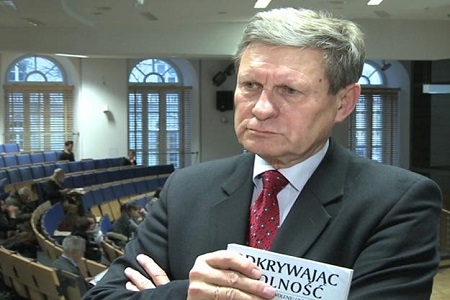
Leszek Balcerowicz: Polonyalı iktisatçı ve eski Polonya Ulusal Bankası Başkanı (2001-2007).
Maliye Bakanı (1989-1991) ve Başbakan Yardımcısı (1997-2000) olarak görev yaptı.
“Şok terapi” veya “Balcerowicz Planı” olarak da bilinen reform programıyla tanınıyor.
IGOR LYUBASHENKO:Sanki “oligarksız dönüşüm” anlatısını tanımlıyorsunuz. Oligarşik ekonomilerin dönüşümü için böyle bir tasarıma gerek var mı?
LESZEK BALCEROWICZ:Bunlar sadece sloganlar. Oligarşik sermaye karşısında rekabet artırılmalıdır. “Korunan” sektörler piyasaya açılmalıdır.
AB ile imzalanmış Ortaklık Antlaşması uygulanmalı ve Ukrayna ekonomisi rekabete açık hale gelmelidir.
Ukrayna bir yandan istilayla mücadele ederken diğer yandan reform yapmak, bu arada düşman kazanmamak zorundadır.
IGOR LYUBASHENKO:Dediğiniz gibi Ukrayna iki cephede birden mücadele ediyor. Bir iktisatçı olarak siyasi-ekonomik cepheyi mi, askeri cepheyi mi daha önemli görüyorsunuz?
LESZEK BALCEROWICZ:Askeri tehdit bahane edilerek reform ertelenmemelidir.
Reform Ukrayna için yüksek yaşam standardı ötesinde askeri başarı anlamına geliyor. Ekonominiz zayıfsa hiçbir alanda güçlü olamazsınız.
Rusya’nın saldırganlığı reformun hızlandırılması için bir uyaran kabul edilebilir.
IGOR LYUBASHENKO:Başarılı dönüşümün ön koşulu güçlü liderlik mi, halk desteği mi?
LESZEK BALCEROWICZ:İkisi bir bütündür. Hatta üç etkene ihtiyaç vardır.
Birincisi, ne yapması gerektiğini bilen liderliktir. Mevcut kadro Ukrayna’nın 1991 yılından beri sahip olduğu en iyi ekiptir.
İkincisi, koordinasyondur. Kilit mevkilerde görev alacak 100 veya 200 doğru insan bürokrasinin iş yapma biçimini değiştirir.
Üçüncüsü, siyasi temeldir. Mevcut parlamento Ukrayna tarihindeki en reformcu meclistir.
IGOR LYUBASHENKO:Ukrayna halkının reformun doğrultusuna ilişkin öngörüsünün azaldığı gözleniyor. Uzun vadede siyasi temel için kaygı duymalı mıyız?
LESZEK BALCEROWICZ:Reform ve “sancı” kelimeleri birlikte zikredilir. Sanki reform yapmamak sancısızlık anlamına gelir. Oysa bu doğru değildir.
Gaz fiyatlarındaki artışın Ukrayna’da huzursuzluğa yol açmadığını hatırlayalım. Başarının sırı sağlam bir programa dayanan profesyonel ve içten bir iletişimdir. Polonya’da böyle olmuştu.
Reform programı kapsamlı olduğu kadar dengeli olmalıdır. Halkın hoşuna gitmeyecek sıkı tedbirler yanında küçük ve orta boy işletmeleri rahatlatacak önlemler de içermelidir.
Reformun başarısı zamana bağlı olmakla birlikte ilk adımın atılmasında gecikilmemelidir.
IGOR LYUBASHENKO:Yeni-medya çağında insanlar sonuçları bir an önce görmek istemiyor mu?
LESZEK BALCEROWICZ:Katılmıyorum. İnsanlar ciddi reformun zaman alacağını bilecek kadar akıllıdır.
IGOR LYUBASHENKO:Batı’nın Rusya’ya uyguladığı yaptırımlar etkili oluyor mu?
LESZEK BALCEROWICZ:Zayıf yaptırımlar saldırganın cüretini artırır. Yaptırımlar güçlendikçe risk azalır. Batı umarım yaptırımlardan geri adım atmaz; elbette gerekli olduğu sürece.
Bununla birlikte Rusya’ya zarar veren yaptırımlar değil; enerji fiyatlarının öngörülmeyen düşüşüydü.
Putin’in politikaları yüzünden Rusya henüz Ukrayna’yı istila etmeden zayıf düşmüştü. Yukos örneğinde olduğu gibi ekonomi millileşiyor. Rusya’da “geçici özel mülkiyet” var.
Bu ülkede size ve mülkünüze ne olacağını bilemezsiniz. Kendinizi korumak veya hasımlarınızı yok etmek için siyasiler ve bürokratlarla kişisel ilişkiler kurarsınız.
Nefes alamayan sermaye ülkeden kaçınca Rusya dışarıya borçlanmak zorunda kalır. Batı yaptırımlarının etkili olacağı nokta burasıdır.
Rusya’da durgunluk kaçınılmaz görünüyor. Putin askeri ve sivil sanayi arasında er geç zorlu bir seçim yapacak.
IGOR LYUBASHENKO:“Otoriter modernleşme” mümkün mü?
LESZEK BALCEROWICZ:Neyi kastettiğinize bağlıdır. Deli Petro Rusya’yı tepeden modernleştirmek istedi. Bugünkü karşılığı kamu sektörüdür.
Yukarıdan aşağıya reformun bugün başarı şansı yok. Modern ekonominin yapısı bunu tolere etmeyecek kadar karmaşıktır.
IGOR LYUBASHENKO:Başarının koşulları nedir?
LESZEK BALCEROWICZ:Rekabetçi güçlü bir piyasa ve siyasi seçkinlerden bağımsız kalabilen girişimciler. Yani bugün Rusya’da olmayan şeyler.
Yeltsin döneminde Rusya Batı modeli yönünde ilerliyordu. Putin ilk üç yılın ardından bu trendi tersine çevirdi ve ekonomiyi siyasallaştırdı.
Brezilya gibi ülkelere ve devlet-öncülüğünde modernleşmeye ilişkin öyküler mitostan başka bir şey değil.
IGOR LYUBASHENKO:Rus meslektaşlarımdan sıkça duyduğum “otoriter modernleşme” kavramı Çin’le işbirliği anlatısına eşlik ediyor.
LESZEK BALCEROWICZ:İşbirliği elbette mümkündür. Ama Rus-Çin ilişkisinin önünde ciddi engeller var. Doğru bağı kurmak için zaman ve milyarlarca dolar gerekiyor.
Diyelim ki başarılı olundu; bu bir modernleşme tablosu değil. Rusya sistemini değiştirmediği takdirde Çin’in küçük ortağı bile olamaz.
IGOR LYUBASHENKO:Yaptırımlar konusuna dönersek, Batı ekonomilerinin aşmaması gereken bir maliyet sınırı var mı?
LESZEK LYUBASHENKO:Batı ekonomisi ve Rusya mukayese bile edilemez. Mesele bilhassa Batı Avrupa’nın birlikte hareket edebilmesidir. Putin tam da bunu engellemeye çalışıyor.
Batı yaptırımları kaldırırsa Rusya’nın saldırganlığını fiilen tanımış olur. Bu durum sadece Ukrayna için değil, dünya barışı için de olumsuz sonuçlar doğurur. Saldırganlığın işe yaradığı anlamına gelir.
Putin’in yaptığı, modern dünyanın temel kurallarından biri olan toprak bütünlüğüne saygı ilkesinin ihlalidir.
IGOR LYUBASHENKO:Batı ülkeleri Ukrayna’ya nasıl bir destek vermeli? “Yeni Marshall Planı” konuşuluyor.
LESZEK LYUBASHENKO:“Marshall Planı” terimi yanlış kullanılıyor. İkinci Dünya Savaşı’nın ardından derin reforma ihtiyaç duyulmuyordu. Tek yapılması gereken pazar ekonomisinin ihyasıydı. Parasal destek fiziksel yeniden yapılanma için gerekliydi.
Ukrayna’ya verilen mali destek reformu tamamladığı için önemli. Aklıma 1989 Polonya’sı geliyor. Reforma odaklanmıştık ve halk desteğinin sürmesi için dış yardım gerekliydi. Reform yapmadan yardım alamazdık.
Dış destek tamamlayıcı unsurdur. Belirleyici olan reform iradesidir ve bunu yapacak olan ülkelerin kendileridir.
Leszek Balcerowicz: Polonyalı iktisatçı ve eski Polonya Ulusal Bankası Başkanı (2001-2007). Maliye Bakanı (1989-1991) ve Başbakan Yardımcısı (1997-2000) olarak görev yaptı. “Şok terapi” veya “Balcerowicz Planı” olarak da bilinen reform programıyla tanınıyor.
İgor Lyubashenko: New Eastern Europe sayfası serbest editörü, Sosyal Bilimler ve Beşeriyet Üniversitesi’nde (Varşova) yardımcı doçent.
Çeviri: Dr. Ömer Aytek Kurmel
Cherkessia.net, 3 Eylül 2014
****
A Weak Response Produces Bigger Risks
New Eastern Europe, 24 August 2015
Interview with Leszek Balcerowicz, Polish economist and architect of Poland’s economic reforms in the 1990s. Interviewer: Igor Lyubashenko
IGOR LYUBASHENKO: After the 2014 EuroMaidan Revolution references to Poland’s economic transformation in the 1990s have once again become very popular among Ukrainian intellectuals. These comparisons, however, are often quite simplistic. What are, in your opinion, the fundamental differences between today’s Ukraine and Poland a quarter of a century ago?
LESZEK BALCEROWICZ: Poland symbolises a certain type of transition, which is sometimes referred to as “shock therapy”. However, I try to avoid using this emotionally-loaded term and prefer to speak of a radical approach. In Poland, it meant the rapid introduction of a front-loaded comprehensive programme with the objective of both stabilisation and transformation. The implementation of this programme was consistent during the first two years of the systemic change and it was then largely maintained. Poland was not the only country to introduce such a programme. It was also introduced in the Baltic states.
On the other hand, there were several different examples of non-radical approaches. One of them can be found in Ukraine. For various, also political, reasons changes were delayed for several years (especially stabilisation). As a result, the overall situation of the country got worse, not better. At the same time, the institutional and structural reforms were half-hearted. Here I especially refer to de-monopolisation and the extension of economic freedom to everybody. As a result, a mixed system emerged, one which allowed a select few to get rich thanks to personal and political connections rather than competitive qualities. Such a system was entrenched. It was the opposite to what was done in Poland where competition had increased even before the privatisation of the state economy. The latter was a more long-lasting process. The Polish economy has also been de-monopolised. As a result, even state-owned enterprises had to improve their performance or disappear.
The effectiveness of the radical approach has been confirmed by a number of studies. In particular, they prove that, if sustained, the radical approach brings better results in terms of economic growth than the non-radical one. Having said that, I do not want to imply that if a country, for some reason, has missed the first period of transformation, nothing can be done. Of course, there is always a possibility of catching up as long as there is a proper team and a proper political basis. A good example is Slovakia. During Vladimir Meciar’s rule in Slovakia, the country’s economy was booming, but this was mainly due to fiscal stimulation. However, in the long run, this policy proved irresponsible and short-sighted with radical reforms being delayed for several years. In my opinion, the Slovak case is more interesting for Ukraine than the Polish one. I really appreciate the efforts of the Slovak reformers, such as Mikuláš Dzurinda and Ivan Mikloš and I am really happy that they are among the experts who are now trying to provide advice to Ukrainian authorities.
Regarding the question itself, of course, there are huge differences between Poland and Ukraine. At the start of the transformation, both countries suffered from hyperinflation. This problem is like a fire in your house that you have to deal with immediately. Fighting hyperinflation in Ukraine was postponed, whereas in Poland it was done much faster. Today Ukraine has different challenges, namely high inflation caused by the devaluation of the hryvnia. Furthermore, as many institutional changes have taken place we can no longer talk about a typical socialist system in Ukraine. I would say that there is a very imperfect mixed system which requires the introduction of more competition in many sectors of the economy. It also requires the restructuring of the state apparatus as well as changes to regulations hampering the development of small- and medium-sized enterprises. My impression is that some of these changes have already taken place. Other changes are envisioned in the programme of the new governing coalition.
In other words; the main difference between Poland and Ukraine’s economy is the fact that the Ukrainian economy has turned into an oligarchic one.
This is what I was referring to, without using the term “oligarchic” itself. This is the outcome of the first changes not having been sufficiently radical including a radical liberalisation of the economy. If there is significant competition, those who get ahead are those who are better and not just those who have good connections. When the economy starts experiencing some oligarchic elements, the first thing to be done, immediately, is to increase competition and restructure the state apparatus.
What you are speaking about actually fits into the popular narrative of “de-oligarchisation transformation”. Do you think this is a proper concept? Is there a need to create such a new concept of transformation specific for oligarchic economies?
These are rather slogans. Increasing competition is crucial when oligarchic capital emerges. It is essential to expose the “shielded” sectors of economy to the open market. From this point of view, it is important that the association agreement with the EU should finally be implemented and the Ukrainian economy opened to external competition. It is one more task that has been delayed, unlike in Poland if you want to compare. What should be added, though, is that one cannot fight on all fronts simultaneously. Ukraine faces Vladimir Putin’s invasion and the Ukrainian authorities have to calculate how to proceed in order to succeed, but also not to make too many enemies.
Indeed, Ukraine is fighting wars on two fronts – the front of political and economic reforms and the military front in Donbas. As an economist, how would you assess which one is of primary importance?
Both problems are of extreme importance. However, what should be stressed here is that in Ukraine’s current situation the military threat should not become an excuse for the lack of reforms. The result of such an approach would be a weaker economy and a weaker defence. I do not want to say that the Ukrainian authorities are performing this kind of policy. Nevertheless, I definitely think it is necessary to warn about the dangers of this approach. As a matter of fact, the Russian aggression should be regarded as a stimulus for even faster reforms. A country with a weak economy is weak in general. In the end, you cannot have a strong army without sufficient economic resources. In Ukraine’s case, reforms are thus not just a matter of improving living standards, they are also a condition for more effective actions in the military dimension.
In your opinion, what is the most important precondition for a successful transformation – strong political leadership or support from the public?
These factors should be seen together, as a package. It is rare that one factor is enough. In fact, three factors are usually needed to succeed in a difficult economic situation. Firstly, there needs to be a leadership that understands what must be done. After my meetings with President Petro Poroshenko, Prime Minister Arseniy Yatsenyuk, Finance Minister Natalia Yaresko and other Ukrainian leaders I have an impression that they do not need to be told what to do. From my point of view, intellectually it is the best team that Ukraine has had since 1991. Secondly, there is the issue of coordination. There needs to be good managerial capacity to stabilise and reform the country. This does not mean that the whole bureaucracy needs to be changed. That would be impossible. What you need is to have 100 to 200 good people who are in the right positions to change the behaviour of the administration. This task should be done rather quickly. Thirdly, the political basis is crucial. It is difficult for me as an outsider to judge the managerial aspect of the changes in Ukraine. As for the political basis, the current parliament, although not without its own problems, is the most reformist parliament in Ukrainian history.
There are more and more signs that the Ukrainian people are less understanding when it comes to the direction of the reforms. I am afraid that the political basis may not be strong enough in the long term...
I have noticed that it is usually fashionable for intellectuals to be on the pessimistic side. That is why I would rather not base such judgments on individual intuitions, but on surveys. If I refer to the Polish experience, what actually mobilises people is professional and honest communication. By the way, whenever people mention reforms they usually add the word “painful”. It is a cliché and insinuates that the opposite (no reforms or delaying reforms) would be painless, which is not true. In fact some changes, like the increase in gas prices, have been already done in Ukraine without mass unrest. Of course, you will never convince everybody, but there is no need to convince all citizens. In my opinion, good communication, if based on a sound programme, is possible and necessary.
On the other hand it is true that if you want to maintain support you need a comprehensive programme, containing both unpleasant measures and measures that, for example, have a positive impact on small- and medium-sized enterprises. It is important to show positive changes as well. This is not a criticism of the Ukrainian authorities; these are just my observations from the transformation experiences of different countries in the world. Undoubtedly, in Ukraine’s case the stabilisation of the hryvnia is now very important. Thanks to the agreement with the International Monetary Fund, significant steps have already been taken in this direction. Its effect will also have a political impact. The rest of the fundamental reforms that we have already discussed need more time to be successfully implemented. However, they need to be started quickly.
But the truth is that in this era of new media people tend to expect immediate results.
I would not agree with that statement. I think people in general are smart enough to understand serious reforms need time.
Let us also look at Russia. How do you assess the effectiveness of the West’s sanctions against Russia in light of its aggression towards Ukraine?
If you face an aggressor, then whatever you do is risky. In other words, if we take game theory as a basis for analysis, we see that a weak response usually produces bigger risks. Weak sanctions are regarded by the aggressor as proof that aggression pays off. With this in mind, I have always been a supporter of stronger sanctions as a less risky option. I hope that the West will be able to maintain and strengthen them if necessary.
However, so far Russia has suffered economically not because of the sanctions, but because something that was not foreseen happened, namely there has been a steep decline in the prices of oil and gas. Putin’s policies had made Russia structurally weak even before the aggression against Ukraine. As a matter of fact we can say that several factors have weakened Russia’s capacity to grow. This includes the growing politicisation of Russia’s economy, which can be observed in the growing nationalisation (exemplified by the Yukos case) and in what I call “a temporary private ownership”. In Russia even if you are an owner you never know what may happen to you and your property. This, in turn, makes you think about using available non-formal connections with decision-makers and bureaucrats to preserve your own position or destroy your enemies. It also discourages investments and encourages capital flight forcing the Russian economy to borrow money from abroad. In my opinion, this is the area where the western sanctions can be particularly effective. Russia is already heavily dependent on the production and export of raw materials. Add to this the military aggression and its economic consequences and it is almost certain that there will be a recession in Russia. If Russia’s economy does not grow and if the sanctions are maintained or strengthened, Putin will face a serious dilemma – how to choose between butter and guns? He will have difficult choices to make.
In your view is “authoritarian modernisation” possible, or is it just a myth?
It depends on what you mean by this term. Think about Peter the Great. He attempted to modernise Russia through what can now be called a “state sector”. But the top-down reforms cannot succeed in today’s circumstances. The modern economy is simply too complex.
In that case, under which conditions could such development be theoretically possible?
There should be a strong market with a lot of competition and private entrepreneurs who are genuinely independent from the political elite. According to what I spoke of earlier, it is the opposite to what we actually see in Russia. Under Boris Yeltsin Russia was moving towards the western model. Putin reversed this trend after about three years of being in power and increased the politicisation of the economy. Such a model cannot work. Stories about countries such as Brazil, praising it as an example of state-led modernisation, are myths.
And yet when I speak to my Russian colleagues I often hear them mentioning the idea of “authoritarian modernisation”. Usually, this narrative goes in pair with the narrative of co-operation with China.
Of course co-operation is possible. There is an obvious possibility to sell more Russian gas to China. But at the same time there are huge infrastructure barriers to doing that. It would take time and billions of dollars to construct the proper connections. Even if this is successful, it would have nothing to do with modernisation. If the system does not change, Russia would simply become China’s vassal.
Returning once again to the issue of sanctions, do you think that there is a level of cost for western economies that we should not cross?
When compared to Russia, the western economy is enormous. Hence, it is rather a question of maintaining unity, especially in Western Europe. This is exactly what President Putin is trying to undermine. If the West lifts the sanctions, it de facto recognises Russia’s aggression. This would have negative consequences not only for Ukraine, but also for peace in the world. It would simply mean that aggression pays off. What Putin did is a violation of one of the principal rules of the modern world – respect for territorial integrity.
What should western support for Ukraine look like? What should be its logic? There has been some talk about a “new Marshall Plan”…
The term “Marshall Plan” is usually misused. After the Second World War there was no need for deep reforms. It was easy to restore the market economies which had already existed in some shape and form. Financial support was necessary for the physical reconstruction. In today’s Ukraine financial support is important as a supplement for economic reforms. This resembles the situation in Poland after 1989. We focused on reforms and external financial support was needed to maintain people’s support for them. Without reforms there would not be any major support. In other words, reforms and financial assistance go hand-in-hand. Countries grow through private business, they do not grow through the state sector. The state sector poisons both the economy and politics. External aid is important if you have an unstable situation, especially in the fiscal area and it should be regarded as a means to support the measures taken by the country itself.
Leszek Balcerowicz is a Polish economist and the former chairman of the National Bank of Poland (2001-2007). He has held other high positions in the Polish government, including the minister of finance and the deputy prime minister (1989-1991 and 1997-2000). Balcerowicz is best known for implementing the transformation programme of Poland’s economy in the 1990s, which became popularly known as “shock therapy” or the “Balcerowicz Plan”.
Igor Lyubashenko is a contributing editor with New Eastern Europe. He is also an assistant professor at the University of Social Sciences and Humanities in Warsaw.
Bu haber toplam 2714 defa okundu.


Cemil Cabir Ertuğ
Ben bu adamın görüşlerine katılmıyorum Anlattığı, bırakın yapsınlar deyip batılı kapitallere teslim olsunlar diyor özetle.
08 Eylül 2015 Salı Saat 00:59