Karakter boyutu :


Thomas de Waal:Kırım, Rusya ve Abhazya ile Güney Osetya için Temas Seçenekleri

16 Ocak 2016 Cumartesi Saat 12:19
Thomas de Waal , 26Kasım 2015
Ukrayna krizinden bu yana Abhazya ve Güney Osetya’nındurumu kötüye gitti. Batının “Kırım benzerlerine” antipatisiAbhazya ve Güney Osetya’ya zarar verdi.
Kafkasya’da çatışmalar volkana benzer. Bu talihsiz bir benzerliktir. Patlamalar kısa ve yok edicidir. Ardından uzun süre sessizlik egemen olur, hiçbir şey kıpırdamaz. Müzakereler uzar gider, çok küçük meseleler üzerine pazarlık edilir. Yeni bir patlama olup satıh değişinceye kadar sorunun özü aynı kalır.
Feci 2008 savaşı ve Rusya’nın tanıma kararından bu yana Abhazya ve Güney Osetya sakin ve bastırılmış durumdalar.
Taraflar Cenevre’de 33 defa bir araya geldiler ama tek başarı masaya oturabilmekti. Müzakereler önemsiz konular üzerinden yürüdü.
Bu arada bölgede ve dünyada çok şey değişti. Moskova tarafından tanınmak Abhazya ve Güney Osetya’nın dünyadan daha fazla soyutlanmalarına ve Rusya’ya daha bağımlı hale gelmelerine sebep oldu.
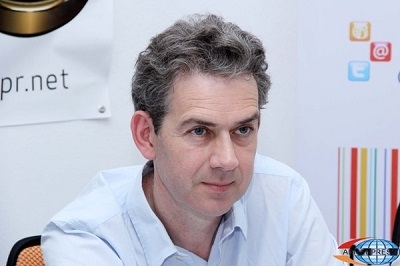
Thomas de Waal:Carnegie Europe yerleşik olmayan ortağı.
Abhazyalılar ve Güney Osetyalılar Rusya’da “Kafkasya kökenliler” olarak kötü muamele görüyorlar. Rusya ekonomisinin krizi onlar için daha az yardım anlamına geliyor.
Ukrayna krizi öncesinde bile Abhazya ve Güney Osetya’nın dünya ile teması azalmıştı. Birleşmiş Milletler misyonu UNOMIG’in bölgeyi terk etmesi Tiflis ve Moskova’yı hiç etkilemedi ama Abhazya’nın dünya ile tek kalıcı bağını kopardı.
Gürcistan’ın önceki hükümetinin çıkardığı “işgal altındaki topraklar yasası” Tiflis’in Abhazya ve Güney Osetya ile ilişkilerini kesti.Söz konusu yasa yabancı STK’ların Abhazya’ya erişimlerini sınırlıyordu ki bu zaten Alexander Ankvab’ın istediği bir şeydi.
Ukrayna krizinin ortaya çıktığı 2014 yılından bu yana durum daha da kötüye gitti. Abhazya ve Güney OsetyaKırım’ın ilhak edilmesine ve Rusya’nın Ukrayna doğusuna silahlı müdahalesine destek vermeye zorlandılar. Güney Osetya bu desteği seve seve verdi ama Abhazya o kadar istekli değildi.
Batının “Kırım benzerlerine”antipatisiAbhazya ve Güney Osetya’ya zarar verdi.Batı 2008 yılında ayrılıkçılığın – Kosova örneğindeki gibi - gibi belli koşullar altında mümkün olduğunu düşünüyordu.
Kırım’ın Rusya’ya bağlanmasından sonra toprak bütünlüğü tezi ağır bastı.Batılı politikacılar Ukrayna’nın toprak bütünlüğünü destekleyen demeçler vermeye başladılar. AB Dış Politika Yüksek Temsilcisi Federica Mogherini Tiflis ziyaretinde aynı şeyi Gürcistan için dile getirdi.Ne var ki formaliteden ibaret bu açıklamalar sahadaki gerçekliği değiştirmedi.
Durum parlak değil.Gürcistan’da topraklarından kopmuş bir kuşak mülteci olarak büyüdü. Batı Gürcistan’da birçok insan 1993 yılında kaybettikleri ve bir daha görmedikleri evlerinden sadece bir-iki saat mesafede yaşıyor.
Rusya tarafından tanınmanın Abhazya ve Güney Osetya’ya kimi yararları oldu. İnsanlara “hayatınız 2008 öncesinden iyi mi?” diye sorarsanız güvenlik ve sosyal haklara ilişkin olumlu yanıtlar alırsınız. Emekli maaşları Rusya Federasyonu ile aynı seviyeye geldi.
Bunun bedeli Rusya tarafından adım adım ilhak edilmek oluyor. Güney Osetyalılar için bu sorun değil.Nüfusları zaten 30.000 civarında. Uzun süredirbaşkent olarak Vladikafkas’ı görüyorlar.Çoğunluk birleşik Osetya fikrine sıcak bakıyor.
Güney Osetya lideri Leonid Tibilov “birleşme” için referandum konusunu Vladislav Surkov ile konuştuklarını dile getirdi.Kremlin sözcüsü Dmitri Peskov bu açıklamayı hemen yalanladı.
Birleşme seçeneğinin en üst düzeyde ele alındığı anlaşılıyor. Surkov ile görüşmeyi sızdırması Tibilov’un bu senaryodan mutluluk duyduğunu gösteriyor.
Oysa Moskova için durum farklı. Birleşme potansiyel hendikaplar içeriyor.
Kırım senaryosu Güney Osetya’ya uygulanırsa Rusya’nın Batı ile ilişkileri daha da gerilecek.Nitekim mevcut yaptırımların sebebi Kırım’ın ilhakı değil mi?
Birleşme Saakaşvili sonrasında başlayan yumuşamaya da zarar verir. İki ülke beyaz bir sayfa açmak istese de – Moskova’nın işgali sebebiyle – aralarında diplomatik ilişki bulunmuyor. Rusya Güney Osetya’yı ilhak ederse kazandığından daha fazlasını kaybedecek.
Abhazya daha da sorunlu. Bir defa Rusya bu ülke için daha fazla para harcıyor.Birçok kişi Abhazyalıların Rusya’ya “minnet duymadığına” inanıyor.
Tek dostları olmasına rağmen Abhaz siyaset sınıfı Rusya’ya güvenmiyor. Nitekim Surkov’un 2014 yılında hazırladığı ilk antlaşma taslağı kabul görmedi. Rusya için bir numaralı mesele olan yabancılara (yani Rusya uyruklulara) taşınmaz satın alma hakkının tanınması talebine Abhazya eliti hala direniyor.
Kırım’ın ilhakından sonra Abhazya’nın önemi azaldı. Moskova Karadeniz kıyısında stratejik bir toprağa kavuştu. Halk Rusça konuşuyordu ve Moskova’ya sadıktı. Rusya bağımsızlık özlemiyle uğraşmak zorunda değildi.
Mevcut “kazanan yok” şeklinde özetlenebilir.
Uluslararası toplumun büyük kısmı Tiflis’i desteklerken, iki bölgenin arkasında Moskova var.Yani ortak zemin yok.
Abhazya ve Güney OsetyaGürcistan’a “dönmek” istemiyor. Aradaki uçurum giderek açılıyor. Bu üçlü en sonSovyetler Birliği çatısı altında bir aradaydı. Bu da unutulmamalı.
Rus sınır muhafızları Güney Osetya’yı tel örgüler arkasında tutuyor.Sıradan insanların çıkarı sınırın açılmasını gerektirse de bu pek olası görünmüyor.
Abhazya’da durum daha karmaşık. Gürcistan Abhazya üzerinde egemenliğini ihya edemeyecek. Bunu kabul etmesi ve bir sonraki çözüme odaklanması gerekiyor.
Paradoksal görünse bile Gürcistan’ın çıkarlarıAbhazya’nın egemenliğini ve fiili bağımsızlığını güçlendirmesinden geçiyor. Böyle bir Abhazya gelecekte Tiflis ile kendi adına konuşur ve anlaşır.
Rusya’ya bağlanmış ve Rusların taşınmaz alabildiği bir ülke Gürcistan için kaybedilmiş bir Abhazya anlamına gelir.
Şu anda sevinilecek tek şey Abhazya’nın Kırım olmamasıdır.
GürcistanAbhazya’yı “tarafsız statü” ile dünyaya bağlayacak tüm önlemleri desteklemek zorundadır.
Bu bağlamda
- Abhazyalıların dış ülkeleri ziyaret etmeleri önündeki itirazlarını kaldırabilir;
- Abhazyalı öğrencilerin AB Erasmus Programı kapsamında Avrupa’da eğitim görmelerinin önü açılabilir;
- Türk gemilerinin Abhazya ile yasal ticaret yapmalarına izin verilebilir;
- Türkiye Sohum’da konsolosluk veya temsil bürosu açabilir;
- Avrupa Birliği ve Birleşmiş Milletler Abhazya’da “enformasyon büroları” açabilir.
Abhazya bu önlemleri uzun zamandır bekliyor. Birkaç sene önce radikal görülebilecek bu hamleler şimdi Abhazya’yı dış dünyaya bir nebze olsun bağlayacak bebek adımlarıdır.
Çeviri: Dr. Ömer Aytek Kurmel
Cherkessia.net, 16 Ocak 2016
****
Crimea, Russia and Options for Engagement in Abkhazia and South Ossetia
Thomas de Waal
November 26, 2015
Since the Ukraine crisis, the situation has worsened in Abkhazia and South Ossetia. Western antipathy to any notion of a Crimea precedent has hurt the two territories.
Conflicts in the Caucasus have an unfortunate resemblance to volcanoes. They erupt in short and devastating episodes of violence, then for a long period everything is quiet and nothing moves. There are protracted negotiations, generally about very small issues, and political declarations, but the essence of the problem remains unchanged - until a new eruption occurs and changes the landscape.
The conflicts over Abkhazia and South Ossetia have been in a quiet and depressed condition since the disastrous five-day war of 2008 and Russia's decision to recognize the two territories as independent states.
The parties have met in Geneva 33 times but the main achievement of those talks has been, in a sense, the talks themselves, the fact that the parties to the conflict have managed to keep on negotiating with one another, albeit over very minor issues.
In the meantime, much has changed in the region itself and internationally. The paradox for Abkhazia and South Ossetia is that Russian recognition has only made these two places more isolated internationally and more dependent on Russia. Being "hitched to the Russian cart" has had increasingly negative consequences for the Abkhaz and South Ossetians. Inside Russia, they are treated with contempt by many Russians as "persons of Caucasian nationality." The decline of the Russian economy means that subsidies from Moscow have decreased.
Even before the deterioration of relations between Russia and the West over Ukraine, international engagement in Abkhazia and South Ossetia had declined considerably. The departure of the UN mission, UNOMIG, was a development that made little difference to the governments in Tbilisi and Moscow, but it was a big blow for Abkhazia, which lost its only permanent international presence. At the same time the previous Georgian government's "law on occupied territories" saw Tbilisi disengage from direct contacts with Abkhaz and South Ossetians and insist that the only legitimate outcome was "de-occupation" by Russia. The law limited the engagement of outside NGOs in Abkhazia--and the government of Alexander Ankvab made them less welcome in any case.
Since the Ukraine crisis broke out in 2014, this situation has got even worse. The new international environment has had negative consequences for both Abkhazia and South Ossetia. They have been put under pressure to support Moscow's annexation of Crimea and military intervention in eastern Ukraine--something the South Ossetians have agreed to with enthusiasm, but the Abkhaz have been noticeably much less willing to do.
Western antipathy to any notion of a "Crimea precedent" has hurt the two separatist territories. In 2008, Europe was living with the "Kosovo precedent"--the fact that a large part of the international community had decided to support Kosovo's claim to independence against the wishes of Serbia. That did not translate into any Western support for Abkhazia and South Ossetia. It did mean however that it was accepted internationally that separatism was not impossible, but could be approved under certain circumstances (in the case of Kosovo, a long process led by the United Nations).
After Russia unilaterally annexed Crimea in 2014, the pendulum has swung back towards a reaffirmation of the idea of territorial integrity. Western politicians waste no opportunity to declare their support for the territorial integrity of Ukraine - and of Georgia, as European Union foreign policy chief Federica Mogherini did on her recent visit to Tbilisi. (Incidentally, this has led Azerbaijan to make accusations of "double standards," as the OSCE Basic Principles document which is the basis for the negotiations on Nagorny Karabakh foresees some kind of referendum on the future status of Karabakh, which theoretically would allow for it to secede from Azerbaijan). Yet these declarations have become formalistic and do nothing to change the situation on the ground.
The realities on the ground remain bleak. In Georgia a whole generation of internally displaced persons (IDPs) has grown up as refugees. Many people in western Georgia live only one or two hours away from homes that they lost in Abkhazia in 1993 and have not been able to see since.
Recognition by Russia has brought some benefits to Abkhaz and South Ossetians. If you ask them "Is life better than before 2008," many people mention a feeling of security and social benefits. Pensions are now being paid at the same level as in the Russian Federation. The price being paid for this is creeping annexation by Russia. For South Ossetians, this is not a problem. The population in South Ossetia is now tiny, probably no more than 30,000. For many years the de facto capital of South Ossetia has been Vladikavkaz, not South Ossetia and most Ossetians would welcome the idea of a unified Ossetia.
Recently, South Ossetian leader Leonid Tibilov let slip that the idea of a referendum on "unification" with Russia had been discussed with Kremlin official and ideologist Vladislav Surkov. Kremlin spokesman Dmitry Peskov was forced to deny the report. Evidently it is an option being discussed at the highest levels of the Russian leadership - and one that Tibilov would welcome, hence his eagerness to leak the substance of the discussion he had with Surkov. But for Moscow there would be obvious minuses in this scenario.
The Crimean scenario in South Ossetia (as this would be, if executed) would further exacerbate relations with the West. After all, it was the annexation of Crimea, in contravention of international law, which triggered the most punitive Western sanctions against Russia. And it would completely burn Moscow's bridges with Tbilisi. Following the downfall of its bête noire in Georgia, Mikheil Saakashvili, Russia has been trying to rebuild a relationship with the new Georgian government, but the two countries still have no diplomatic relations because of Moscow's de facto control of Abkhazia and South Ossetia. If Russia were to formalize that takeover with a Crimea-style takeover of South Ossetia, it would alienate Georgia completely and thus lose far more than it gained.
Abkhazia is even more problematic for Russia. It requires more money and yet there is a widespread perception in Russia that the Abkhaz are "ungrateful" for Moscow's military and financial investment in the republic. Although Russia remains Abkhazia's almost only partner and friend, much of the Abkhaz political elite is still suspicious of Russia. They resisted the first draft of a treaty that Surkov had drafted for them in 2014. And they still resist the change that is most important for Moscow - the right for foreigners (or Russians in other words) to buy property in Abkhazia.
Since Crimea was taken over, it seems that Abkhazia's importance for Russia has declined. Crimea provides Russia with a perfect large Russian-speaking Black Sea strategic location, without all the difficulties presented by a local indigenous population who are not 100-per-cent loyal to Moscow and who still insist on their claims to independence.
Truly, the situation is one "with no winners." Is there anything that can be done?
On the high political level, the answer seems to be "No." The positions of Tbilisi on the one hand, supported by most of the international community, and of the two territories, supported by Moscow, on the other hand, are irreconcilable. Abkhazia and South Ossetia have no intention of going "back" to Georgia. The more time passes, the bigger the gap between Sukhumi and Tshkhinvali and Tbilisi. It should not be forgotten that the last time Abkhazia, South Ossetia and Tbilisi were in one country, it was not independent Georgia, but the Soviet Union.
South Ossetia unfortunately is hidden behind fortified fences controlled by Russian border guards. Although it would be in the interest of all ordinary people for the administrative boundary line (ABL) to be open, that is not likely to happen any time soon.
Abkhazia is a more complex case. Georgians need to accept that they cannot restore Georgian sovereignty over Abkhazia and should therefore focus on what is the next best option.
The paradoxical conclusion must be that for Georgians should help Abkhazia achieve greater sovereignty and de facto independence. A stronger more "sovereign" Abkhazia will keep open its options in the future for making arrangements and cutting deals with Tbilisi, while an Abkhazia that is basically absorbed into Russia - and in which Russians acquire land and property - will be completely lost and alien to Georgia. To put it another way: the only good news here is that Abkhazia is not Crimea.
In practical terms this means that Georgians should support all measures which integrate Abkhazia into the outside world on a "status-neutral" basis. That means: dropping objections to Abkhaz traveling abroad; allowing Abkhaz students to study in Europe under the European Union's Erasmus program; allowing Turkey to have its ships trade legally with Abkhazia and perhaps open a consulate or representation office in Sukhumi; encouraging the European Union and United Nations to open "information offices" in Abkhazia.
These are measures that Abkhaz themselves have long wanted. A few years ago these might have looked radical. Now they are barely enough to open up Abkhazia even a little to the outside world.
Nonresident Senior Associate
Carnegie Europe
Bu haber toplam 3070 defa okundu.


Natho Mustafa
Ambargolar falan Abhazya kendini aştı :)
19 Ocak 2016 Salı Saat 01:29
İlluminati
Türkiyede yaşayan abhazlar Abhazyada yaşayanlardan fazla bildiğim. Ama Abhazya türkiyeye karşı ekonomik yaptırım kararı alıyor.
Tamam rusya tepenizde anladık da, e türkiyede ki 400 bin abhaz ne olacak, birde işiniz gücünüz ?? Komedi filmi gibi vesselam.
Erkan Yüksel
Bu yazıyı Abhazlar 2 kere okusun bence.Önemli tespitler var. Abhazya üzerine yazan çok az kişi var çünkü.
17 Ocak 2016 Pazar Saat 02:15