Karakter boyutu :


Dmitri Trenin:Rusya’ya C Planı Lazım

24 Ocak 2016 Pazar Saat 23:36
Dmitri Trenin , 15 Aralık 2015
Rusya Batı ile zıtlaşırken Batı-yanlısı veya Avrasyacı dış politika konseptlerini geri getiremez. Moskova yeni stratejik konsept ararken bir yandan da krizleri önleyici mekanizmalar geliştirmek zorundadır. Bu arayış iç reformla desteklenmediği takdirde Romanov rejiminin yaşadığına benzer bir çöküş kaçınılmaz olur.
Büyük güçler arasındaki çeyrek asırlık yapıcı ilişkiler 2014 yılında sona erdi. Moskova Washington’un küresel hegemonyasına Ukrayna ve Suriye’de meydan okudu.
Ama aynı Rusya kırılgandır. Ruslar yüzyıl önce savaş koşullarının sebep olduğu çöküşü hatırlama zorundalar. Romanov hanedanı reform yapmaktan kaçınmıştı. Bugün aynı akıbet yaşanmak istenmiyorsa değişim ertelenmemeli, kurumlar ciddi biçimde ıslah edilmelidir.
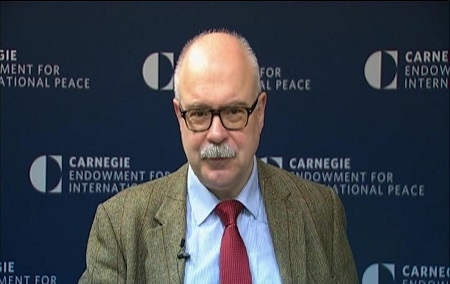
Dmitri Trenin:Carnegie Moscow Center Direktörü
Günümüzün küresel mücadelesi geçmişte Büyük Güçler arasında yaşanan rekabeti andırıyor. Amerika ile Çin arasında ciddi meseleler var. Washington ve Moskova arasındaki zıtlaşma uzamış durumda. Rusya son hamleleriyle Amerika’nın İkinci Dünya Savaşı ertesinde inşa ettiği dünya düzenine meydan okudu.
Rusya ile Amerika arasında çok temel bir siyasi çelişki var. Bazen gerilim düşebilir, işbirliği bile mümkün olabilir, ama stratejik tavizler vermek taraflar için bir seçenek değil.
Üstelik Rusya ile Avrupa’nın büyük kısmı birbirlerine yabancılaşmış durumdalar. Rusya’nın yanı başında hasım bir Ukrayna var. Ukrayna’daki yeni uluslaşma süreci Rusya karşıtlığına dayanıyor. Rusya 25 yıl aradan sonra dünya arenasına dönüşün bedelini Ortadoğu batağına saplanarak ödüyor.
Moskova bir süre önce iki zıt dış politika konseptini hayata geçirdi ama sonuç alamadı.
Birinci konsept Rusya’nın Batı dünyasına (Avroatlantik veya Geniş Avrupa) katılmasını öngörüyordu.
İkincinin hedefi Avrasya’yı bir kez daha ama bu defa yeni ilkeler altında Rusya’nın liderliği altında toplamaktı. Sırasıyla BDT, Kolektif Güvenlik Antlaşması Örgütü ve nihayet Avrasya Birliği gündeme geldi.
A ve B Planları diyebileceğimiz bu iki konsept 2010’lu yılların ilk yarısında zorlandı, Ukrayna kriziyle ağır yara aldı.
Bundan sonra ne yapılabilir?
Rusya gerçekleri kabul etmek, hayata geçmeyenlerden dolayı pişmanlık duymamak; sonra da hızla değişen dünyamızda neyin olanaklı neyin olanaksız olduğuna karar vermek zorundadır.
“Ne kadar cazip görünse de gerçekleşmesi olanaksız” kategorisine birçok şey sığdırabiliriz: 2016 yılında seçilecek Amerikan yönetimiyle yeni bir “yenilenme”; Gorbaçev’in Lizbon’dan Vladivostok’a uzanan Geniş Avrupa vizyonunun geri dönüşü; IŞİD’e karşı – Hitler-karşıtı koalisyona benzer – kapsamlı bir işbirliği gibi.
Rusya’nın gerçekleştirilebilir hedeflere yönelmesi gerekiyor. En başta Amerika ile doğrudan çatışmanın önlenmesi var. Zira bunun gerçekleşme ihtimali yok değil. Suriye’deki talihsizliğin benzeri bir fiyasko Baltık Denizi veya Karadeniz üzerinde yaşanırsa çok daha tehlikeli sonuçlar doğurur.
Bugünkü kırılgan uluslararası güvenlik ortamı yeni bir silahsızlanma süreci için uygun değil. Burada öncelik stratejik taarruz silahlarına ve orta menzilli füzelere ilişkin mevcut antlaşmalara uymak olmalı.
En acil öncelik çatışmaların istenmeden başlamasının engellenmesidir.
Bunun için NATO-Rusya Konseyi gibi donmuş kurumlara işlerlik kazandırmak gerekiyor. Bu kurumların sıcak hatlar ve güvenli iletişim kanallarıyla donatılmış kriz diplomasisi mekanizmalarına dönüştürülmesi lazım. Ayrıca özel diyaloğu sürdürecek küçük ve güvenilir gruplara ihtiyaç var.
Rusya için stratejik amaç – bir tür C Planı denebilecek – yeni bir dış politika konsepti geliştirmek olmalıdır. Bu konsept Rusya’nın kendine yeterlilik gereksinimi ve dünya ile temas halinde olma zorunluluğunu iyi dengelemelidir.
Rusya’nın ihtiyaç duyduğu şey Batı veya Doğu ittifaklarına katılmak veya kendi blokunu oluşturmak değildir. Rusya’nın mevcut sınırları dünyada ciddi bir güç olmasına zaten yetiyor. Rusya’nın yapması gereken gözünü Batıya çevirmiş Çin’in meydan okumasına karşı yeni bir bölgesel strateji inşa etmektir. Zira bu ülke Pekin’den Avrupa sınırlarına uzanacak Geniş Avrasya için çalışıyor.
Meselenin özü, Rusya’nın içerideki zaaflarını gidermediği takdirde dünya gücü olamayacağı gerçeğidir.
Rusya iç gelişmesine mutlaka öncelik vermelidir. Bunu ülke olarak bir geleceği olması için yapmak zorundadır. Rusya’nın siyasi ve ekonomik düzeni – eğer değişmezse – mutlak bir çöküşe doğru gidiyor.
Amerika ile zıtlaşma Rusya İmparatorluğunun yüzyıl önceki çöküşüyle benzerlik gösteriyor. Tek fark bu defa tehdidin ekonomik yanının ağır basmasıdır.
Rusya’nın içinde bulunduğu kritik durum gecikmiş reformların hayata geçirilmesine vesile olabilir.
Hedef yasalar önünde eşitlik; her seviyedeki yöneticinin yurttaşlara hesap verebilmesi; yatırımların önündeki yapay engellerin kaldırılması; sağlık hizmetlerine, eğitime, bilime, teknolojiye ve yenilenmeciliğe öncelik verilmesi; Rusya’nın kalkınmasına ve dış politikasına ilişkin ana meselelerin ulusal diyalog ve uzlaşı yoluyla belirlenmesi olmalıdır.
Rusya’nın ekonomi ve hükümet tarzının değişmesi için seçkin zümrenin dönüşmesi şart. Rus eliti ulusal çıkarlara hizmet etmekten ziyade kurumsal ve kişisel menfaatler peşinde. Yönetici sınıf içinde liyakat sistemini işletmek, yaşamın her alanında hukukun üstünlüğünü egemen kılmak gerekiyor.
Rusya reform sürecini tepeden başlatabilir; bu sayede istikrarı da koruyabilir. Ama Romanov rejiminin nasıl sona erdiğini unutmayalım.
Siyasi irade reformun arkasında durmazsa – yüzyıl önce olduğu gibi – uzun süren bir dış politika krizi sistemi çökertmekle kalmaz, ülkeyi de parçalar.
Çeviri: Dr. Ömer Aytek Kurmel
Cherkessia.net, 24 Ocak 2016
****
Russia Needs a Plan C
Dmitri Trenin , 15.12.2015
In the middle of a prolonged confrontation with the West, Russia cannot revive its Western-oriented or Eurasianist foreign policy concepts. In foreign relations, crisis-avoidance mechanisms must be the priority while Russia seeks a new strategic concept. That rethink must be underpinned by domestic reform; otherwise, the Russian state could share the fate of the Romanov regime in World War I.
In 2014, a quarter of a century of mostly cooperative relations among the great powers came to an end. In Ukraine and Syria, Moscow has essentially thrown down a gauntlet to what it sees as Washington’s global domination.
Yet this assertive Russia is also fragile. Russians should turn their minds back to 1914, when amid a clash of world powers the old Russian regime came crashing down. If it wants to escape the fate the reform-averse Romanovs endured in World War I, the current ruling elite needs to prioritize domestic change and carry out a comprehensive overhaul of the country’s institutions.
The current global clash of interests looks like a return to a period of old Great Power competition. The United States and China have much to quarrel about, and Washington and Moscow are now in a phase of extended confrontation. Russia’s recent actions challenged the world order that the United States was trying to shape after the end of the Cold War.
The political conflict between Russia and the United States is fundamental. There may be moments when tension eases and cooperation is possible, but there are no obvious options for strategic compromise.
Moreover, Russia has entered a phase of mutual estrangement with a large part of Europe; and it has, for the foreseeable future, acquired a hostile Ukraine on its border, whose new foundation for nation-building is based on hostility to Russia. Finally, Russia has been sucked into the permanent theater of conflict that is the Middle East. This is the price to pay for its bid to return to the world political arena after a twenty-five-year break.
In its recent history, Russia has sought to embrace one of two competing overarching foreign policy concepts—but both have shattered.
The first aimed to bring Russia—on terms it deemed acceptable—into the fold of the collective West (Euroatlantic or Greater Europe). The latter again sought to unite the Eurasian space through Russian leadership under new principles, first within the framework of the CIS, then through the Collective Security Treaty Organization, and finally as the Eurasian Union.
Both concepts—we can call them Plan A and Plan B—came into jeopardy in the first half of the 2010s, and were ultimately torpedoed by the Ukraine crisis.
What is to be done? First of all, Russia must accept reality and not regret the might-have-beens; then, it should decide what is possible in this rapidly changing world, and what is impossible, however desirable it may look. We should put several grand ideas into the “desirable but impossible” category: another “reset” in relations with the next U.S. presidential administration; a revival of Mikhail Gorbachev’s concept of a Greater Europe from Lisbon to Vladivostok; and a big, tightly-coordinated coalition against the self-proclaimed Islamic State, analogous to the anti-Hitler coalition of World War II.
Instead, Russia should focus on more achievable and important goals, chiefly, preventing a direct confrontation with the United States, the likelihood of which is now significantly higher than zero. What happened with the Russian airplane over Syria was very unfortunate; a similar fiasco above the Baltics or the Black Sea would be even more dangerous.
This new fragile international security environment is not ready for new arms control measures. The main concern in this field must be to maintain existing agreements on strategic offensive weapons and medium-range missiles. The immediate priority is even more critical: mechanisms are needed to avert unintended conflicts.
That means we need to change the operating regime of currently frozen institutions such as the NATO-Russia Council. These institutions should become permanent mechanisms for crisis diplomacy, with hotlines and secure communication channels. They also need small groups of trusted individuals who can maintain a confidential dialogue.
The key strategic objective must be to develop a new Russian foreign policy concept—a kind of Plan C. This concept should be based on a balanced understanding of both Russia’s need for self-sufficiency and its necessary engagement with the rest of the world.
It is not worth modern Russia’s while either to join the integrationist alliances of the West or the East, or to try to create its own bloc. Russia’s current borders allow it to hold an important place in the world in any case. But Russia does need to develop a new regional strategy to deal with the challenge of a Westward-looking China, which is in the process of forming a Greater Eurasia that stretches from Beijing to the frontiers of Europe.
Yet all this is not the main thing. The key point is that Russia will be completely unable to revitalize itself as a world power if it does not address its own internal failings.
Russia needs to unambiguously prioritize domestic development—not just for the sake of having an international role, but to give itself any kind of future. Russia’s current political and economic order, if it persists, will sooner or later doom it to a tragic failure as a state.
In that sense, the current standoff with the United States holds many parallels with the way World War I brought about the collapse of old imperial Russia—except that this time the challenge to the Russian regime is more economic than political.
This critical situation could also be the spur to make long-overdue domestic changes. That means asserting the right of all to equality before the law; making government at all levels accountable to its citizens; removing artificial obstacles for the development of Russian business; setting as a priority the development of health care, education, science, technology, and innovation; and achieving, through dialogue, nationwide agreement on what are the key issues for Russia’s development and foreign policy.
Changing Russia’s model of economy and government requires overhauling its ruling elite, which now primarily serves specific corporate and personal rather than national interests. It means creating conditions for ensuring meritocracy within the ruling class and for making the rule of law supreme in the economy and society as a whole.
In principle, Russia can begin to carry this out from above while keeping the country under control and protecting it from destabilization. Yet the last days of the Romanovs have some somber lessons. If there is insufficient political will for comprehensive reform, then, just as happened with the last imperial regime a century ago, an acute foreign policy crisis could trigger the collapse of not just the system, but the entire country.
Bu haber toplam 2404 defa okundu.


Erdem Tezcan
Z planı olsa ne olacak ? Olacak olan neyse o olacak.
Rusya'nın sorunu rejimiyle.
Erdem Yılmaz
Bu adamın tespitleri çoğunlukla doğru ama önerileri ulaşılabilir değil. Dikkat ederseniz o da çaresiz konuşuyor.
27 Ocak 2016 Çarşamba Saat 14:58
Mahmut Aydemir
Recep Yurdakul bey, çok mantıklı ve toparlayıcı olmuş açıklamalarınız.
Sizi face'ten tanıyoruz.
İyi bir araştırmacı olduğunuzu söylememe gerek var mı?
Lütfen cherkessia.net'te düzenli olarak yazın.
Şimdiden sağolun, varolun.