Karakter boyutu :


Islam Tekushev:Mülteciler ve Abhazya

01 Şubat 2016 Pazartesi Saat 21:50
Islam Tekushev,5 Ocak 2016
Abhazya Suriyeli mültecilerin ilk tercihi olmasa da tarihi bağlar onu bir seçenek haline getiriyor
Abhazya tüm hendikaplarına rağmen birkaç yüz Suriyeli mülteci tarafından tercih edildi. Bu sığınmacılar Muhacir olarak adlandırılan sürgünlerin torunlarıydı ve ülkeye kabul edilmeleri tesadüfi değildi.
Onlara dönüşçü deniyor. 500 civarında Suriyeli mülteci kişi dönüş programı kapsamında Abhazya’ya geldi.
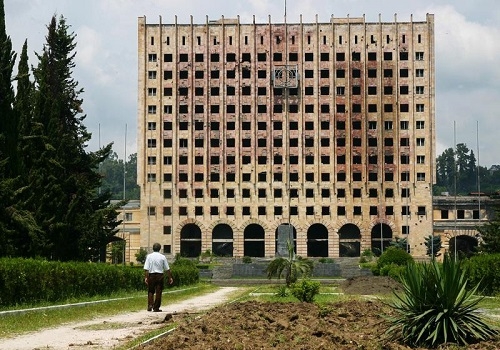
Savaş sırasında (1992-93) hasar görmüş eski parlamento binası. Abhazya Rusya’nın ekonomik ve siyasi desteğine bağımlı
Dengeyi Değiştirmek
Suriye’deki Abhazların ve Abazinlerin sayısı tam olarak bilinmiyor. Altı Gün Savaşında (1967) Golan Tepelerindeki Hışniye köyünü terk ederek Şam kentinin dış mahallelerine yerleşmişlerdi.
Son çatışmalar başladığında sadece Şam’da 1.500 Abhaz yaşıyordu. Şu anda ülke çapındaki Abhaz nüfus birkaç yüz kişiye inmiş durumda.
Sohum 2012 yılında – Rusya Dışişleri Bakanlığı ve Çerkes diasporasının yardımıyla – Suriye’de bir koridor açtı. Abhazya’ya en çok giriş o yıl oldu; 186 kişi geldi.
Mültecilerle bizzat devlet ilgileniyordu ki bu bir rastlantı değildi.
Abhazya’da Ermeni nüfus artarken Abhazlar kendilerini “sıkışmış” hissediyor, adlarını taşıyan cumhuriyette demografik dengeyi kendi lehlerine çevirmek istiyorlar.
2011 yılında resmi verilere göre Ermeniler 41.000, Abhazlar 122.000 kişiydi. Bugün sayıların eşitlendiği tahmin ediliyor.
Devlet dönenlere para, ev ve yurttaşlık veriyor. Dönüş programı kapsamında şu ana kadar 7.000 Abhaz ve Abazin yurttaşlık aldı. Sadece 2013 yılı içinde mülteciler için harcanan para 40 milyon ruble (384.000 Euro).
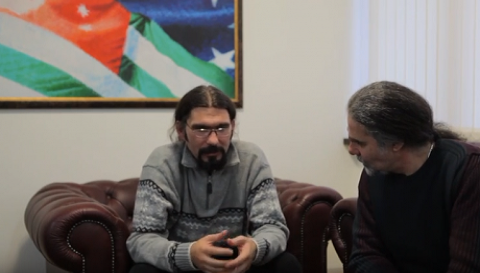
Dönüş öyküsünü anlatan Abhaz kökenli Hacı Bek (takma ad).
Abhazya yine de cazip bir seçenek değil.
Abhazya’ya yerleşen 520 mülteciden sadece 180 kişi Abhaz kökenli. 390 mülteci Abhazya’ya yerleşmiş, diğerleri Suriye’ye dönmüş veya başka bir ülkeye göç etmiş. Yerleşenlerin önemli bir kısmı da Abhazya’da uzun süre yaşamayı düşünmüyor.
Dil bariyeri iş bulmanın önündeki en büyük engel. Bu özellikle yaşlı dönüşçüler için geçerli. Abhaz diasporası üzerine 2015 yılında yapılmış bir anket 1.000 denekten sadece 77 kişinin Abhazca konuştuğunu ortaya koydu.
Rusça bilgisi üzerine bir veri bulunmuyor.
Abazin dönüşçüler Çerkesce’nin özellikle Kabardey diyalektini konuşuyorlar.
“Biletimi aldım ve Krasnodara geldim”
Bütünleşmeyi engelleyen bir başka etkenin inanç farklılığı olduğu görülüyor. Suriyeli Abhaz ve Çerkes mültecilerin çoğu Sünni Müslüman. Yerli Abhazların büyük kısmı ise Ortodoks inancına mensup. Birçok Suriyeli Çerkes’in bu yüzden Abhazya’yı terk ederek Kuzey Kafkasya’ya yerleştiği biliniyor.
Mesela Nevruz Abas ve ailesi… Nevruz “Suriye’de ben de babam gibi askerdim. 1999 yılında karşıma fırsat çıkınca biletimi aldım ve Krasnodara geldim. Köklerim Tuapse’ye dayanıyor” diyor.
Nevruz’un ataları Çerkesce’nin Şapsığ diyalektini konuşuyormuş. Kendisi Kabardeyler arasında yaşadığı için onların diyalektini kullanıyor.
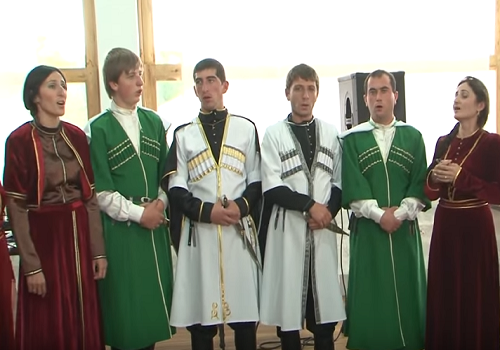
Sohum kentinde düzenlenen kültür şenliğinde şarkı söyleyen Suriyeli Abhaz dönüşçüler 2014.
“Suriye’de savaş başlayınca can güvenliğimiz kalmadı. 2013 yılında eşimi ve 12 ve 14 yaşındaki kızlarımı Abhazya’yı getirdim. Abhaz bir ailenin yanına yerleştiler. Ben Nalçik’te inşaatta çalışıyordum. Birkaç ay sonra onları yanıma aldım.”
Nevruz bürokrasiden yakınıyor. “Mülteci statüsünde değilim. Suriye pasaportumu kaybettim ve savaş sebebiyle yenisini alamadım. Ailem buraya turist vizesiyle geldi. Yenilemeleri gerekiyor. Abhazya bize yurttaşlık vermedi. Sahip olmadığımız ve savaş yüzünden temin edemeyeceğimiz belgeler istediler.”
Nevruz devam ediyor: “Abhazya’da iş bulmak zordu. Yerleşmek daha da güçtü. Kabardey-Balkar’da uzun süre çalıştığım için tanıdıklarım vardı. Eşimi ve çocuklarımı yanıma aldım. Ailemde benden başka çalışan yok. Hamdolsun geçiniyoruz.”
Nevruz’un kararını etkileyen bir başka sebep dini etkenmiş. Nevruz ve ailesi mütedeyyin insanlar. İki kızı da başını örtüyor. Abhazya’da dini konular tartışılmasa bile Müslüman dönüşçülerle birlikte yaşamak kimileri için sorun olmuş.
Abhazya’da Müslüman topluluk üç kısımdan oluşuyor: yerli Müslüman Abhazlar; Türkiyeli, Suriyeli ve Ürdünlü dönüşçüler; Kuzey Kafkasya’dan gelip yerleşenler (Abazinler, Adığeler, Çerkesler, Kabardeyler).
Müslümanlar Abhazya nüfusunun yüzden onundan biraz fazlasını teşkil ediyor. Kuzey Kafkasya’nın aksine burada aşırı gruplar yok. 2000’li yılların başında Selefi akımlar kök salmak istemiş ama başaramamışlar. Abhaz halkı diğer inançlara saygılı olsa bile İslam burada pek kabul görmüyor.
Sessizce Çalışanlar
Mustafa Alo ve eşi Abazinler. 12 yaşındaki kızları ve ve 7 yaşındaki oğullarıyla iki yıldır Sohum’da yaşıyorlar. Çocukları ortaokula gidiyor. Aile dini görevlerini yerine getiriyor.
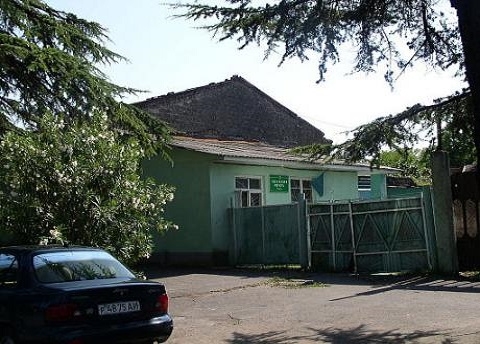
Başkent Sohum’da cami. Müslümanlar Abhazya nüfusunun yüzden ondan biraz fazlasını oluşturuyor.
Mustafa şöyle diyor: “İnşaat mühendisiyim. Suriye’de İçişleri Bakanlığına iş yapan ciddi bir firmanın yöneticisiydim. Eşim doktor. Ama diplomalarımızı getiremediğimiz için kendi alanlarımızda çalışamıyoruz. Dil de bilmiyoruz. Yeni yeni Rusça konuşmaya başladık.”
Mustafa ve ailesi Rusya’ya girer girmez Abhazya’ya geçmişler. Dönüş Komitesi onlara yardım etmiş. “Bir süre diğer dönüşcülerle birlikte bir senatoryumda kaldık. Sonra Gudauta’da ev verildi” diyor.
“İnşaat sektöründe çalışıyorum” diye devam ediyor: “Abhazya Devlet Üniversitesinde okuyan Suriyeli bir gençle beraber apartmanlarda tadilat yapıyoruz. Yazın kazancımız fena değil. Kışın sezon bitiyor. Sadece devlet yardımıyla geçinmek çok zor oluyor.”
2015 yılında ekonominin kötüye gidişi dönüşçülerin sorunlarını daha da ağırlaştırdı. Rusya’dan gelen para azalınca Abhazya hükümeti emekli maaşlarını ve devlet yardımlarını kıstı.
Abhazya’da dönüşçüler her ay 10.000 ruble (93.38 Euro) devlet yardımı alıyor. Bu rakamın yerlilerin aylık maaşına eşit olması sıkıntı yaratıyor.
Dış Etkenler
“Rusya faktörü” Abhaz ve Çerkes diasporalarının kaderini birinci derecede belirliyor.
Rusya Abhazya yönetimine şantaj yapıyor. Bunun için de para yardımını kullanıyor. Yardımın azalmasıyla sosyal harcamalar sabit olmaktan çıktı. Ödemeler de zamanında yapılmıyor.
Suriye’deki Rusya temsilcilikleri artık vize vermiyor. Gerekçe Çerkeslerin muhalefet saflarında da çarpışmaları. Yani dönüş yolu şimdilik açık değil.
Rusya ile Türkiye arasındaki kriz Abhazya’yı bir ikilemle karşı karşıya bıraktı. Sohum Türkiye’ye yaptırım uygulayarak Rusya’nın stratejik ortağı olmak istiyor. Ama yaptırımlardan ilk zarar gören diaspora olacak.
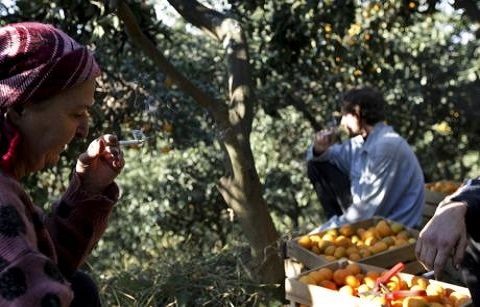
Narenciye hasatı. Abhazya’nın sayılı ihraç kalemlerinden olan narenciye Rusya’ya satılıyor. Gerek yerliler gerek dönüşçüler için ekonomik fırsatlar sınırlı.
Apsnı Vakfı Başkanı Soner Gogua bu tehlikeyi Kasım ayında dile getirmiş, vize rejiminden Abhaz dönüşçülerin de zarar göreceğini söylemişti.
Türkiye’de 100.000 Abhaz yaşıyor. Suriye’de sayıları 8.000 ile 10.000 arasında değişen Abahzlar içinde Marşan, Agırba, Kudzba, Maan, Çiçba, Kaytan ve diğer sülaleler var.
Abhazya’ya sadece Rusya üzerinden ulaşılabiliyor. Rusya Türk gemilerinin erişimini sınırlarsa bundan Abhazya zarar görecek. Zira Türkiye Abhazya ekonomisi için önemli bir ülke.
Yaptırımlar meselesi Abhazya’da hararetle tartışılıyor. Birçok kişi Abhazya ile kaderini bağladığı diaspora arasındaki bağların kopmasından kaygı duyuyor.
İslam Tekushev: Caucasus Times sayfası başeditörü.
Çeviri: Dr. Ömer Aytek Kurmel
Cherkessia.net, 1 Şubat 2015
****
An unlikely home
Islam Tekushev, 5 January 2016
Abkhazia may not be the first port of call for Syrian refugees, but historical ties link this unrecognised state on the Black Sea coast to the epicentre of conflict.
Abkhazia may be an unlikely home for Syrian refugees in the South Caucasus, but since war broke out, this small de-facto state on the Black Sea, considered by most states to be Georgian territory, has welcomed a few hundred refugees fleeing the conflict.
The Abkhazian authorities’ decision to accept these refugees was not one made at random. Abkhazia’s Syrian refugees are descendants of the Mukhadjirs—ethnic Abkhaz and the closely related Circassian people who were expelled from their ancestral homelands in the north-west Caucasus following the Russian Empire’s conquest of the region in the wars of the nineteenth century.
Although the majority of them are indeed refugees by any definition of the word, in Abkhazia itself they are referred to as ‘repatriates’. This is connected with the fact that Syrian refugees—500 of whom arrived in Abkhazia following the outbreak of war—migrated here under the auspices of the de-facto government’s repatriation programme, which has operated in Abkhazia since 1993.
Tilting the balance
There are no precise figures for the number of ethnic Abkhaz, and closely related Abazins, in Syria. Ethnic Abkhaz arrived in Syria in 1967, in the aftermath of the Six Day War. Following Israel’s occupation of the Golan Heights, Abkhaz and Circassians, who were living in the settlement of Hassaniya, fled the region to the safety of Damascus and its suburbs.
According to estimates given by the Damascus Circassian community before the outbreak of conflict, approximately 1,500 Abkhaz lived in various districts of the capital alone, alongside the much more numerous Circassian community (50,000-70,000). A local contact, who I do not name to protect his identity, estimates that only a few hundred Abkhaz remain in Syria today.
After the escalation of the crisis in Syria in 2012, the de-facto Abkhazian authorities—with the help of the Russian Ministry of Foreign Affairs and the Circassian diaspora—created a corridor for Syrian mukhadjirs. According to the Abkhazian Ministry of Foreign Affairs, the largest influx of Syrians came in 2012 when some 186 refugees arrived in Abkhazia, and the State Repatriation Committee has become main government organ responsible for the acceptance and housing of refugees.
This is no coincidence. With a growing Armenian community in this de-facto state, the Abkhaz, who have often been in the minority on their territory, could find themselves increasingly ‘squeezed’. The main goal of the committee is to tilt the demographic balance in Abkhazia in favour of the titular nation.
Although the de-facto government’s official census data from 2011 put the Armenian community at 41,000 compared to 122,000 Abkhaz, unofficial estimates believe that the two communities are roughly equal in number. The State Repatriation Committee may also—among other powers—extend financial aid to repatriates, arrange accommodation and grant them citizenship. So far, this programme has seen up to 7,000 ethnic Abkhaz and Abazins from Jordan, Turkey and other countries receive Abkhazian citizenship. In 2013 alone, some 40 million rubles (£384,000) from the national budget were spent on refugees—an enormous sum by local standards.
Nevertheless, despite the long-awaited return of these compatriots, the attractiveness of Abkhazia to the Abkhaz and Circassian diaspora is quite another question. Settling in has proved a challenge. According to the State Committee, around 520 Syrians have settled in Abkhazia, of whom only 180 are ethnic Abkhaz, the rest being Circassians. Of these, only 390 chose Abkhazia as a permanent place of residence, while the rest have since returned to Syria or resettled in other countries. Many of those who remain likewise do not connect their future with Abkhazia.
The main reason is the language barrier, which reduces repatriates’ chances of finding work. The Abkhaz language presents a real problem for Arabic or Turkish-speaking Abkhazians, particularly older repatriates. Results from a questionnaire carried out in 2015 by the Abkhazian presidential Center for Sociological Research found that among 1,000 respondents from Turkey and other countries with Abkhaz populations, only 77 declared that they spoke the Abkhaz language.
Nothing can be said about their Russian language knowledge. Many ethnic Abazin repatriates to Abkhazia know the Circassian language as a result of their having lived among the Kabardin people (a Circassian group), whose language is more widely spoken in communities across the Middle East.
‘I bought myself a ticket and left for Krasnodar’
Religious differences are also a barrier to integration. The majority of Abkhaz and Circassian refugees from Syria are Sunni Muslims. Most Abkhaz in Abkhazia, by contrast, are Orthodox Christians. For this reason, many Syrian Circassians have left for Russia’s North Caucasus, which shares more cultural similarities.
Nauryz Abas and his family is a particularly good example. Many years ago, when Syria was still at peace, Abas left his family there and moved to Krasnodar in southern Russia.
‘I was a soldier. My father also served his whole life in the Syrian army. When the opportunity came in 1999, I bought myself a ticket and left for Krasnodar,’ says Nauryz. ‘My ancestors were Circassians, from the area where the city of Tuapse now stands. Following the Caucasian war in the 19th century, they fled to Constantinople and then turned up in the suburbs of Damascus, before Syria, in its current form, even existed.’
Nauryz Abas considers himself a Circassian, and works as a builder. His ancestors spoke the Shapshug dialect of Circassian — much closer to the Abkhaz language than to Kabardian. However, Nauryz himself speaks Kabardian, as he grew up in a Kabardin community.
‘When the war in Syria began, my family, my wife and two daughters of 12 and 14 years, came under threat,’ continues Nauryz. ‘In 2013, I was able to bring them to Abkhazia, where they lived with an Abkhaz family. I worked alone in Nalchik [ed. in Kabardino-Balkaria, Russia] in construction for several months, after which they joined me.’
Nauryz has complained of problems with bureaucracy while in Russia. ‘Officially, I am not a refugee as such. I have no citizenship whatsoever. I lost my passport, and couldn't replace it as there is war in Syria. My family came here on tourist visas, which they received in Damascus upon invitation. And now they need to renew them. Abkhazia still hasn’t given us citizenship; they require a number a documents which we do not have, and cannot bring back from Syria due to the ongoing war,’ says Nauryz.
‘In Abkhazia it was difficult to find work, and even tougher to settle down. As I've worked in Kabardino-Balkaria for many years, where I have a lot of friends, I decided to move my family here. It’s tough. I am the only one of us who works. But we somehow manage to survive, praise God,’ he concluded.
Another factor determining Nauryz’s decision—about which he remained silent—was his religion. Nauryz and his family are practicing Muslims. His daughters both wear the hijab. Although people in Abkhazia prefer not to openly discuss their religious convictions, there have been problems living alongside Muslim Mukhadjirs.
Abkhazia’s Muslim community is composed of three groups: local Abkhaz Muslims, members of diaspora communities from Jordan, Syria and Turkey residing in Abkhazia and representatives of ethnic groups from the North Caucasus (Abazins, Adyghes, Circassians and Kabardins).
According to data from various organisations, including results from sociological surveys, Muslims make up just over 10 per cent of Abkhazia’s population. Unlike in the North Caucasus, there are no extremist groups here, though Salafism tried to take root in the early 2000s. However, following the murders of several community leaders, the spread of Salafism receded. The Abkhaz people are quite tolerant towards other confessions, but Islam has not been widely accepted here.
Silent work
This is Mustafa Alo’s second year living in Sukhumi with his 12-year old daughter and 7-year old son. Mustafa and his wife are ethnic Abazins, and repatriates from Syria. Mustafa’s children attend a secondary school in Sukhumi. His family, just like his parents, are practicing Sunni Muslims.
‘The main problem for me is finding a job in my field. I’m a civil engineer, and in Syria I worked as the head of construction at a major firm which oversaw construction projects for the ministry of internal affairs,’ says Mustafa.
‘My wife is a doctor, but she can't even find work as a nurse, since we have no documents to prove our qualifications. We don't even know the language well. We’ve barely begun to speak Russian,’ wrote Mustafa.
In Mustafa’s words, after he and his family received a visa and were able to move to Russia, they immediately crossed over to Abkhazia, where the State Repatriation Committee was able to help them. ‘For some time we lived with other repatriates in a sanatorium, and were then provided with a house in Gudauta,’ he tells me.
‘I now work as a builder,’ continues Mustafa, ‘renovating apartments together with another young guy from Syria who studies here at the Abkhaz State University. In summer, the money isn’t bad, but as soon as winter comes we're in trouble. There are no orders, and it's very difficult to survive just on welfare.’
In 2015, an economic downturn added to the many woes already facing migrants and repatriates. Against the backdrop of reduced payments by Russia to Abkhazia, the de-facto government slashed pensions and welfare, which could only have an impact on internal politics.
Disputes have arisen around the amount of welfare payments for the poor and for repatriates. The monthly allowance for repatriates in Abkhazia stands at 10,000 roubles (£93.38), which equates to the average Abkhazian’s monthly salary. Likewise, the internal political crisis, which led to a change in the de-facto state’s elite in May 2014, has reduced the ability of the Abkhazian authorities to respond to repatriates’ needs.
Foreign factors
The ‘Russian factor’ also has a significant influence on the situation facing the Abkhaz and Circassian diaspora abroad. The curtailing of Russian state funds to Abkhazia, which had literally become a tool for blackmailing the Abkhazian elite, led to cutbacks in financing in all spheres. Social welfare is no longer indexed, and there also delays in payments.
Moreover, given that Circassians in Syria are also fighting with the opposition, several Russian embassies have ceased issuing visas to Syrian Circassians. Among their number are also Abazins, the closest Circassian group to the Abkhaz. Consequently, an exit route from Syria for repatriates is now closed.
The dispute between Russia and Turkey, which has already led to Moscow levelling sanctions at its southern neighbour, could become yet another threat to Abkhazia’s repatriates. Abkhazia, having positioned itself as a strategic partner, is caught between a rock and a hard place. The first blow from these sanctions—should Abkhazia choose to implement them across its territory—will hit the diaspora.
Soner Gogua, a repatriate from Turkey living in Abkhazia and head of the Apsny fund, voiced his concern on the issue in late November. In his words, the visa regime introduced by Russia for Turkish citizens is having an effect on Turkish businessmen, including ethnic Abkhaz repatriates from Turkey.
The Russo-Turkish wars of the nineteenth century became a reason for the deportation of a significant number of Abkhaz and Circassians to the Ottoman Empire. Today, around 100,000 ethnic Abkhaz live in Turkey. Around 8,000-10,000 Abkhaz live in Syria according to data from the human rights centre Memorial. Among their number are representatives of Abkhaz clans such as Amarshan, Agrba, Kudzhba, Maan, Chichba, Kaytan and others.
As Gogua says, they are only able to reach Abkhazia through Russian transport hubs, like the airport at nearby Sochi. If, in the immediate future, Russia limits the movement of Turkish vessels through the Black Sea, then Abkhazia’s economy will suffer. After Russia, Turkey is a key investor in Abkhazia.
In Abkhazia itself, the matter is one of heated debate, and one which—the majority believe—could lead to a loss of ties with the diaspora. A diaspora to which Abkhazia has tied its future.
Islam Tekushev is the editor-in-chief of Caucasus Times.
Bu haber toplam 4398 defa okundu.


Atabek -Sakarya
Mültecilerin gözünden Abhazya. Bu konu daha önce işlenmemişti. Veya türkçe tercüme olmamıştı bilmiyorum. Sağolun sayın Kurmel.
17 Şubat 2016 Çarşamba Saat 01:55
KOBLİ
Çok önemli belge niteliğinde çeviri. Teşekkürler Aytek bey!
04 Şubat 2016 Perşembe Saat 01:32