Karakter boyutu :


Tomáš Strážay: Vişegrad; Olgun Orta Avrupalı, Toy Avrupalı

17 Haziran 2016 Cuma Saat 23:21
Bölgesel bir girişimin yaşam çizgisinde yirmi beş yıl olgunluk anlamına gelir
Tomáš Strážay, 1 Şubat 2016
Vişegrad Grubunun kuruluşunun 25. yıldönümü öncesinde Orta Avrupa’da bu tür bir bölgesel girişimin doğru yönde atılmış bir adım olduğu söylenebilir.
Son çeyrek asırda Vişegrad Grubu inişler çıkışlar yaşamasına karşılık ayakta kalmayı başardı. Enerji, güvenlik veya altyapı alanlarındaki parlak projeler işbirliğinin gelecekte de devam edeceğine dair umut verdi.
Bölgesel bir girişimin yaşam çizgisinde yirmi beş yıl olgunluk anlamına gelir.
Bununla birlikte V4’ün gücünü ve istikrarını tehlikeye atacak meydan okumaları görmek gerekiyor. Çok sayıda stratejik Vişegrad projesi hala “yapım aşamasındadır”. Yani kırılgandır ve V4 hükümetlerinin siyasi desteğinin sürmesine muhtaçtır.
Diğer meydan okumalar dışsal etkenlerden kaynaklanmaktadır. Bunların arasında başta Ukrayna olmak üzere AB’nin doğusunda hüküm süren istikrarsızlık ve V4 ülkelerinin Rusya’ya dönük yaklaşımları arasındaki farklılıklar vardır. Güneyden gelen göç dalgası bir diğer sınavdır. V4 ülkeleri krizin sebeplerine ilişkin benzer görüşler ortaya koymalarına karşılık tıpkı Brüksel gibi uygun bir çözüm bulamamışlardır.
Sorulması gereken şudur: V4’ün istikrarını güvence altına almak için önümüzdeki aylarda neler yapılmalıdır?
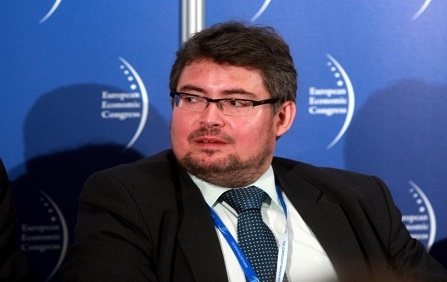
Tomáš Strážay: Slovak Dış Politika Derneği (SFPA) Orta ve Güneydoğu Avrupa Programı başı ve Think Visegrád – V4 Düşünce Kuruluşu Platformu koordinatörü.
Vişegrad Grubu’nun güçlenmesinin ön koşulu iç bütünlüğe önem verilmesidir. Bunun için karşılıklı güven, işbirliğini sürdürme ve artırma kararlılığı şarttır.
Bir başka hayati önkoşul V4’ün AB ve NATO içindeki gücünün korunmasıdır. Bu kurumlara üyelik dört ülkenin en büyük başarısı olarak görülmektedir.
Vişegrad ülkeleri AB için “engelleyici blok” gibi görülmekten kaçınmalıdır. Mülteci krizine ilişkin çözüm önerilerine muhalefetinde kısmen haklı olsa bile V4imajı zarar görmüştür.
Konumlarını güçlendirmek için daha faal politika yapıcı olmaları, yani işbirliğine olabildiğince açık olmaları ve olumlu geri bildirim sağlayacak girişimlere odaklanmaları gerekiyor. Mesela sembolik bir Schengen dostları grubu kurabilir, Afrika Olağanüstü Durumlar Güvence Fonuna destek verebilirler.
Vişegrad’ın önündeki tek seçenek Avrupalı ve Atlantik-ötesi kalmasıdır. Varşova’da yapılacak NATO zirvesi V4 ve geniş Orta Avrupa bölgesinin Atlantik-ötesi arenada güvenilir bir ortak olarak sunulması için bir fırsat sunuyor.
Slovakya’nın AB Konseyi başkanlığı da V4’ün Avrupa için yenilikçi fikirler ve çözümler kaynağı olduğunu göstermesi bakımından bir şanstır.
Vişegrad olgun bir Orta Avrupalı olmasına karşılık – bilhassa faal bir AB politika yapıcısı olarak –toy bir Avrupalıdır. Önümüzdeki birkaç ay Vişegrad’ın olgunluğa girmeye mi hazır olduğunu yoksa ergenliğini uzatmak mı istediğini gösterecek.
Çeviri: Dr. Ömer Aytek Kurmel
Cherkessia.net, 17 Haziran 2016
----
Visegrád: a mature Central European, but still a young European
In the life-span of a regional initiative, twenty five years represents maturity.
Tomáš Strážay, 1 February 2016
On the eve of the 25th anniversary of the Visegrád Group, a strong case can be made that the establishment of this kind of regional initiative in Central Europe was the right step to take. In the last quarter of a century, the Visegrád Group has been through many ups and downs – and yet has proved to be solid enough to survive any crisis. Promising projects, for instance in the fields of energy, security or infrastructure, have provided a good basis for the continuation of cooperation into the future. In the life-span of a regional initiative, twenty five years represents maturity.
There are, however, challenges that might endanger the strength and stability of the V4. A large number of strategic Visegrád projects are still “in the making”, which means that they are rather fragile and depend on the continuing political support of the V4 governments. Other challenges are related to the external environment. These include the continuing instability to the east of the EU, particularly with regard to Ukraine, as well as differences between the V4 countries’ positions towards Russia. The recent massive migration flows from the south represent yet another test, and though the V4 countries have shared views on the origins of the crisis, neither they nor Brussels have yet to find an appropriate solution to it.
The question arises, what needs to be done to secure the stability of the V4 in the months to come? Internal cohesion, based on mutual trust and the willingness to continue and possibly deepen cooperation, should be considered as a crucial precondition for the future development of the Visegrád Group. Another vital precondition is the V4´s standing in the two integrational groupings – the EU and NATO, the accession to which is still perceived as their most important achievements to date.
In terms of the EU, the Visegrád countries should avoid situations where other member states would primarily consider the V4 as a “blocking block”. Although recent developments have shown that the V4 countries might have been to some extent right in terms of their scepticism towards proposed solutions to the migration crisis, the image of the V4 in the EU has been diminished by their stance. To strengthen its position, Visegrád should become a more active policy shaper, which means that it has to be as open to cooperation with other partners as possible and concentrate more on initiatives that would receive positive feedback. The idea of setting up a symbolic group of friends of Schengen belongs to this kind of initiative, as does the V4 countries’ constructive approach to the Emergency Trust Fund for Africa.
Visegrád’s only option for the future is to remain both European and transatlantic. The upcoming NATO summit in Warsaw will provide an opportunity to present the V4 (and the wider Central European region) as a trustworthy partner in the transatlantic arena. Similarly, Slovakia’s Presidency of the EU Council will give us a window of opportunity to show that the V4 can serve as a source of innovative ideas and solutions for Europe as a whole. Although Visegrád is now a mature Central European, it is still a young European, especially in terms of its active shaping of EU policies. The next few months will put to the test whether Visegrád is ready to enter full maturity or is instead more willing to prolong its adolescence.
Tomáš Strážay, the Head of the Central and Southeastern Europe Programme at the Slovak Foreign Policy Association (SFPA) and Coordinator of the Think Visegrád – V4 Think Tank Platform
Bu haber toplam 2622 defa okundu.


Bu habere yorum eklenmemiştir. İlk yorumu siz ekleyin.